I Got Scammed

So, it has been about a month since the last update.
And yes, a lot has happened.
Some of it good.
Some of it very bad.
And some of it so bad that it honestly deserves a huge title like this one.
Because at some point during this rebuild, I realized something that made my stomach sink a little:
I got scammed.
Now, before I get into that, let me say one thing straight away: even though this update has a very dramatic title, it does not mean the project is over.
Quite the opposite, actually.
The engine is now basically done, and the project is very much alive. But to continue the story properly from where I left off last time, I have to talk about what we discovered along the way.
Because once the correct bearings finally arrived, things escalated quickly.
The bearings were finally correct
After all the waiting, all the measuring, and all the messing around with the wrong bearing thickness, the correct crankshaft bearings finally arrived.
We installed them, checked the clearance with Plastigage again, and this time it was finally correct.
Finally.
That was a very nice feeling, because at least it meant we could move on.
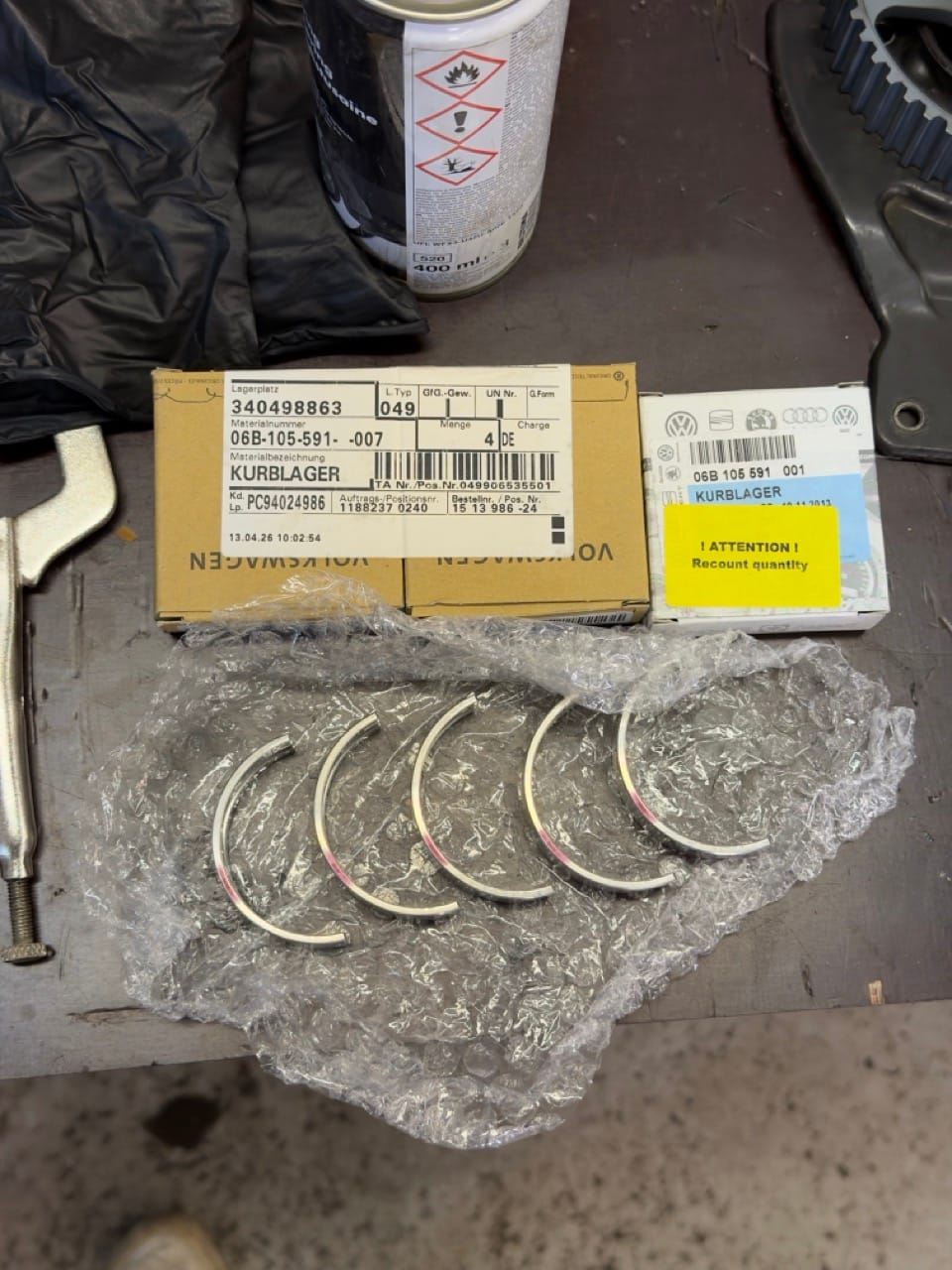
I also found one of the old bearings, which helped confirm that the colour markings we had used were in fact correct. So for once, we were not guessing. The markings matched, the old bearing supported it, and the Plastigage check confirmed it.
So at that point I thought we were in the clear.
Naturally, we were not.
The moment it all went wrong
The next step was preparing the rods and pistons.
Simple enough, right?
Not quite.
Very quickly, we realized that the rod bolts did not fit the rods. I had ordered original Mk6 Golf R / Edition 35 rod bolts, and they were simply too thick. Too beefy. They did not fit.
That was the first real warning sign.
Because if the correct rod bolts for a CDLG / Golf R style engine do not fit the rods that are sitting in the engine, then something is wrong. Not “maybe I ordered the wrong part number” wrong. Properly wrong.
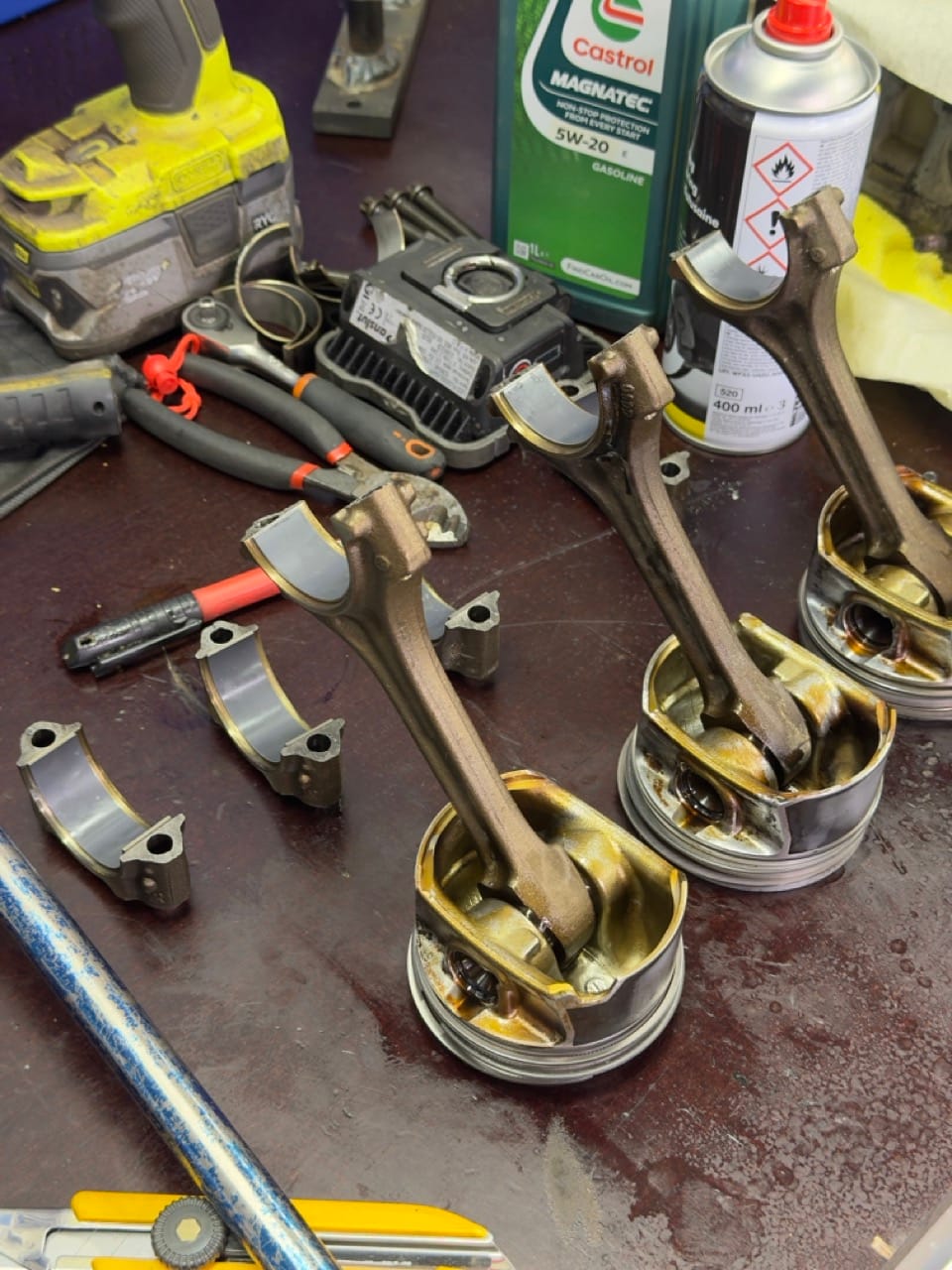
That was what really kicked off the whole investigation.
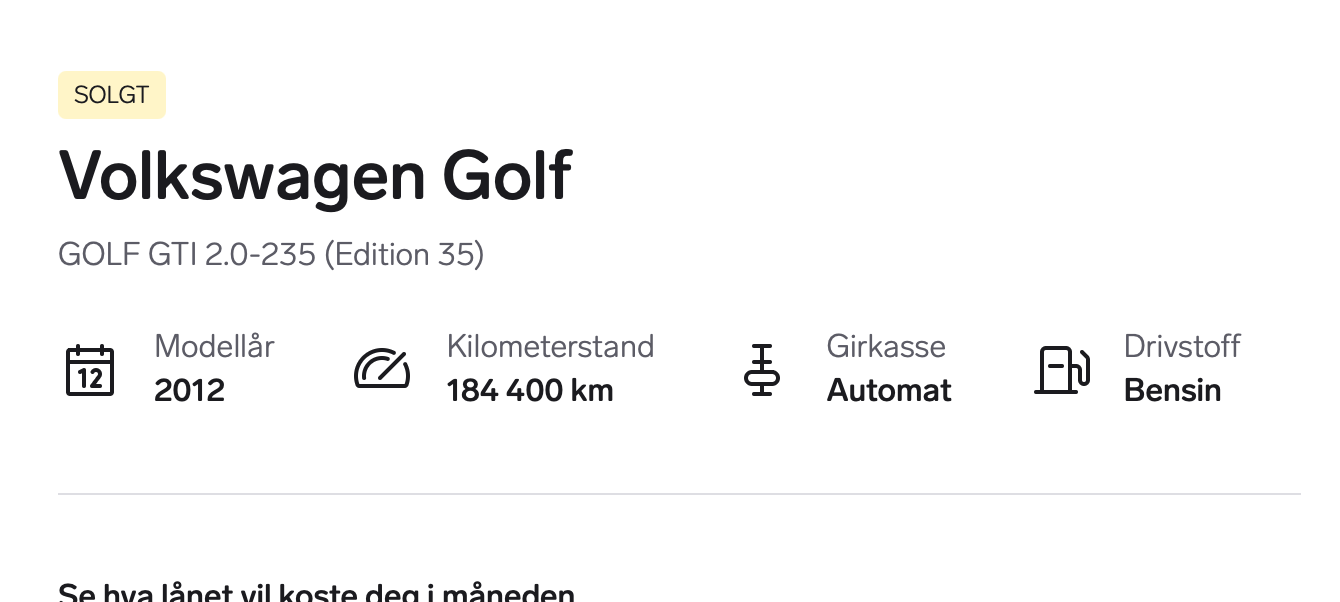
We already knew that the engine had been swapped at some point, because that was mentioned in the ad when I bought the car.
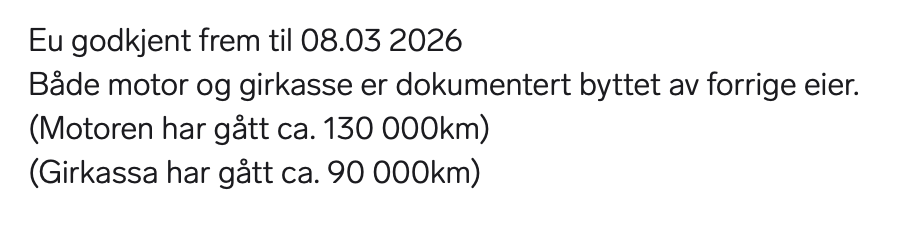
But when someone says “the engine has been swapped”, you kind of assume it was swapped with the same engine. Or at least something with the same specifications.
You do not expect that someone has taken a completely different engine, mixed parts around, and then sold the car as if nothing is unusual.
But after a lot of searching, comparing part numbers, comparing components, and trying to make sense of what was in front of us, we came to a pretty ugly conclusion.
From what we can tell, the car has a Mk5 Golf GTI bottom end.
That means the crankcase, rods, pistons, and potentially the crankshaft appear to be from a Mk5 GTI engine, while the top end is hopefully still the original Edition 35 / CDLG setup.
And then I found another clue that basically confirmed it.
I checked the numbering on the crankcase, and it says:
06F103021H
From what I understand, the Edition 35 / CDLG engine should have an L revision, not an H.
So that pretty much confirmed our suspicions.
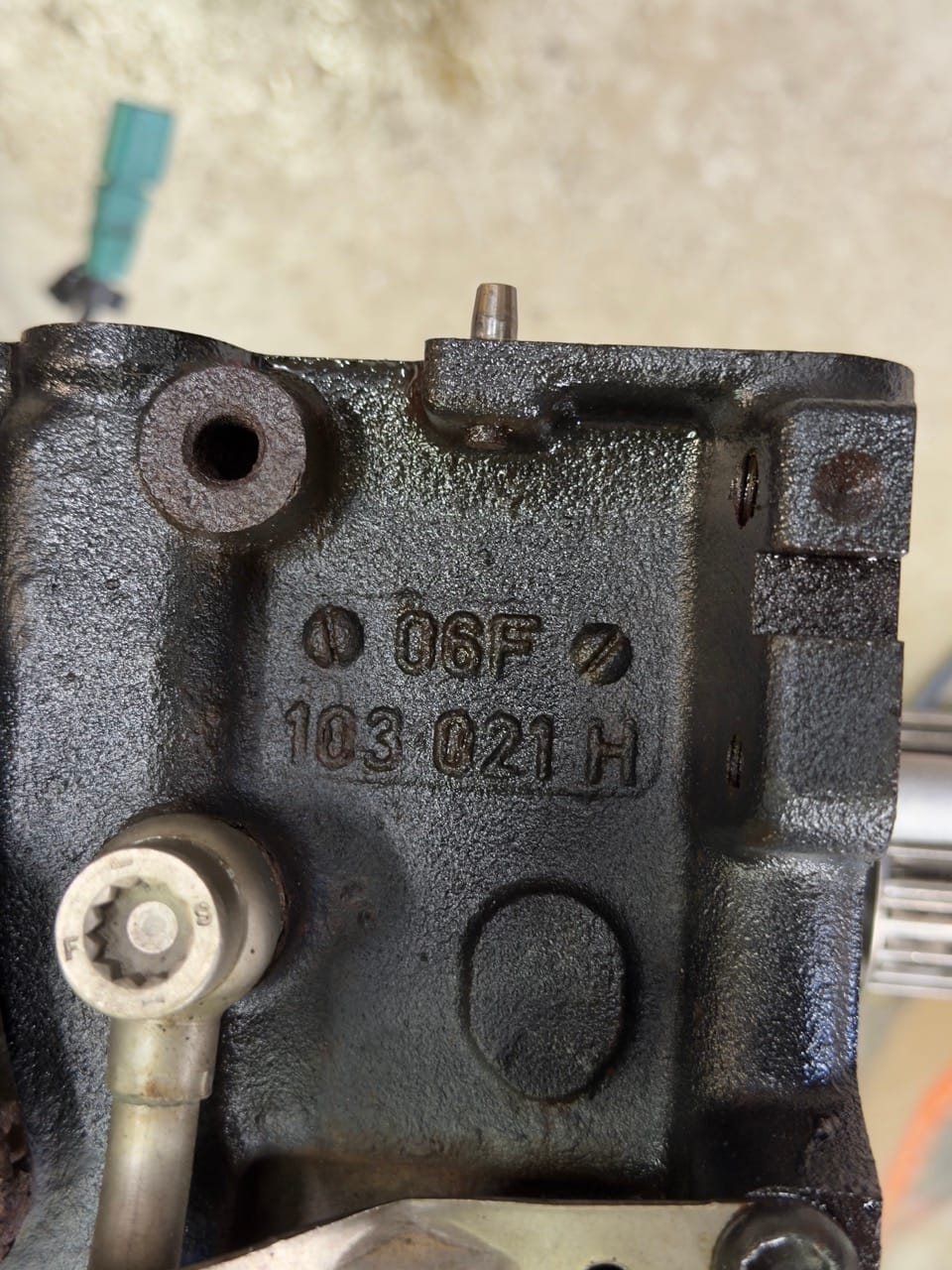
Which means I did not just buy an Edition 35 with an engine swap.
I bought an Edition 35 with what appears to be a previous generation GTI bottom end in it.
Why that is such a big deal
And that is where the frustration comes in.
Because the whole point of the Edition 35, apart from the interior, exterior, and special edition details, is the better engine. That is a huge part of what makes the car what it is.
The Edition 35 uses the stronger engine setup, basically the same family as the Mk6 Golf R.
That is one of the main selling points.
And apparently, mine does not actually have that bottom end anymore.
That is a problem for several reasons.
First, the car is worth less than I thought it was.
Second, it no longer properly matches the specifications it is supposed to have.
And third, if I ever want to sell it later, it gets awkward very quickly.
Because what am I supposed to say?
“Oh yeah, by the way, it has a previous generation GTI bottom end in it.”
That is not exactly a great sales pitch.
The Mk5 GTI bottom end is generally considered safe for around 350 hp, while the Golf R / Edition 35 setup can usually handle closer to around 390 hp. Obviously those numbers depend on tune, condition, torque, fuel, and a million other things, but the point is still the same:
The Edition 35 engine is stronger.
That is literally part of what you pay for.
There is also a compression difference. The Mk5 GTI pistons are, as far as I understand, 10.5:1, while the Golf R / Edition 35 pistons are 9.8:1.
That is quite a difference.
Luckily, since this is direct injection, the higher compression is not automatically a disaster. Direct injection helps reduce knock, so it should be manageable as long as we do not go crazy with boost.
Still though.
That is not the point.
The point is that this is not what I thought I bought.
And yes, I was genuinely very upset when we discovered it. The previous owner said nothing about it being from a different engine generation. I expected the engine swap to mean the same spec engine, not “a different engine with some original parts swapped over.”
That feels very different.
At best, it is misleading.
At worst, it is exactly what the title of this post says.
What now?
So we had a choice.
Either start some kind of case against the previous owner, wait months for it to maybe be handled, maybe pay for a lawyer, maybe argue forever, and maybe end up with some sort of solution…
Or just keep moving.
And honestly, after already pouring a ton of money into this car, I did not really want to spend even more time and money fighting over it while the car sat there doing nothing.
So we kept moving.
Forged rods from FCP Engineering
Since the rods are usually one of the first weak points when increasing power on these engines, we decided the most economical solution was to order forged rods.
So that is what I did.
We ended up ordering forged rods from FCP Engineering.
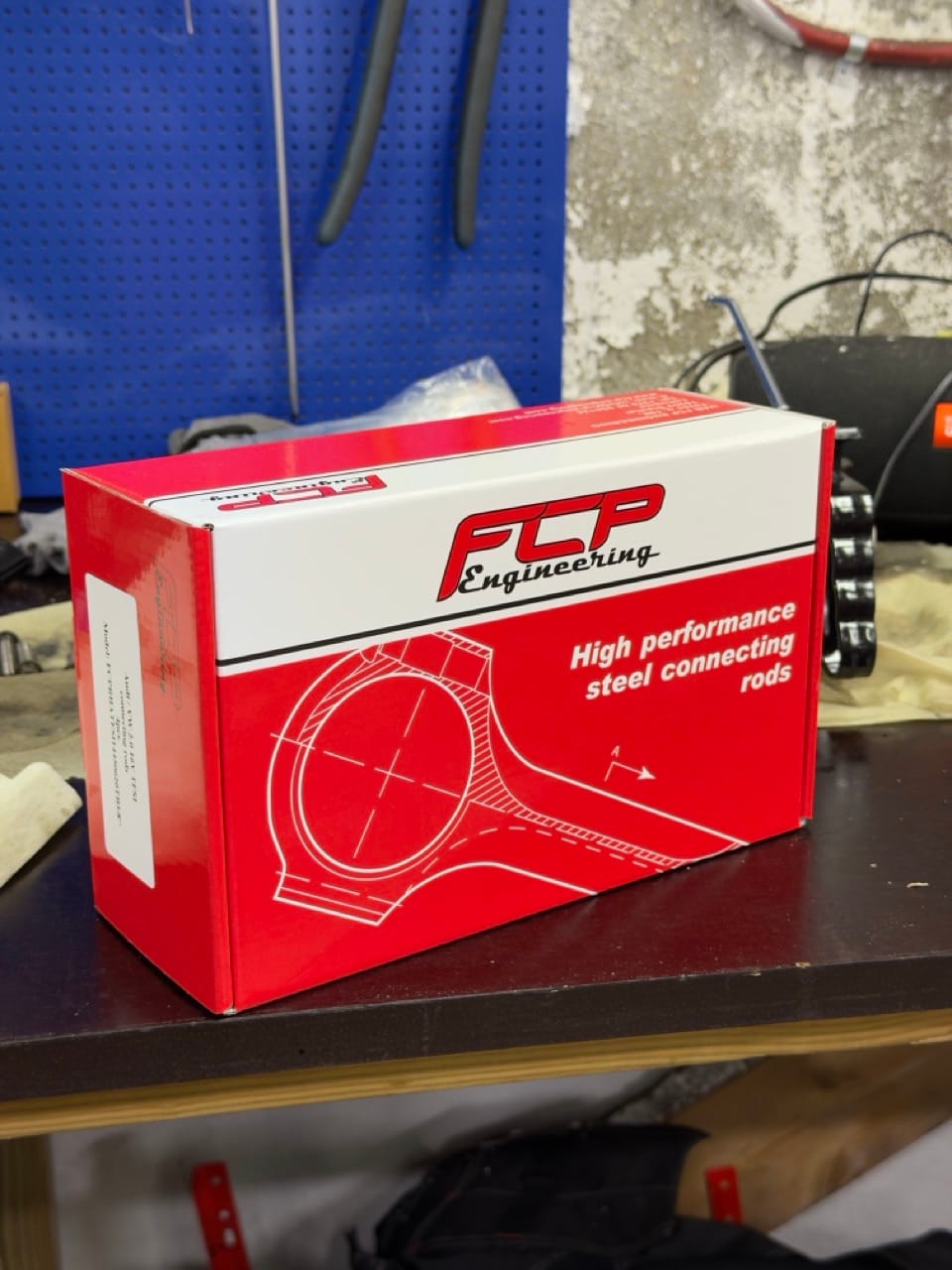
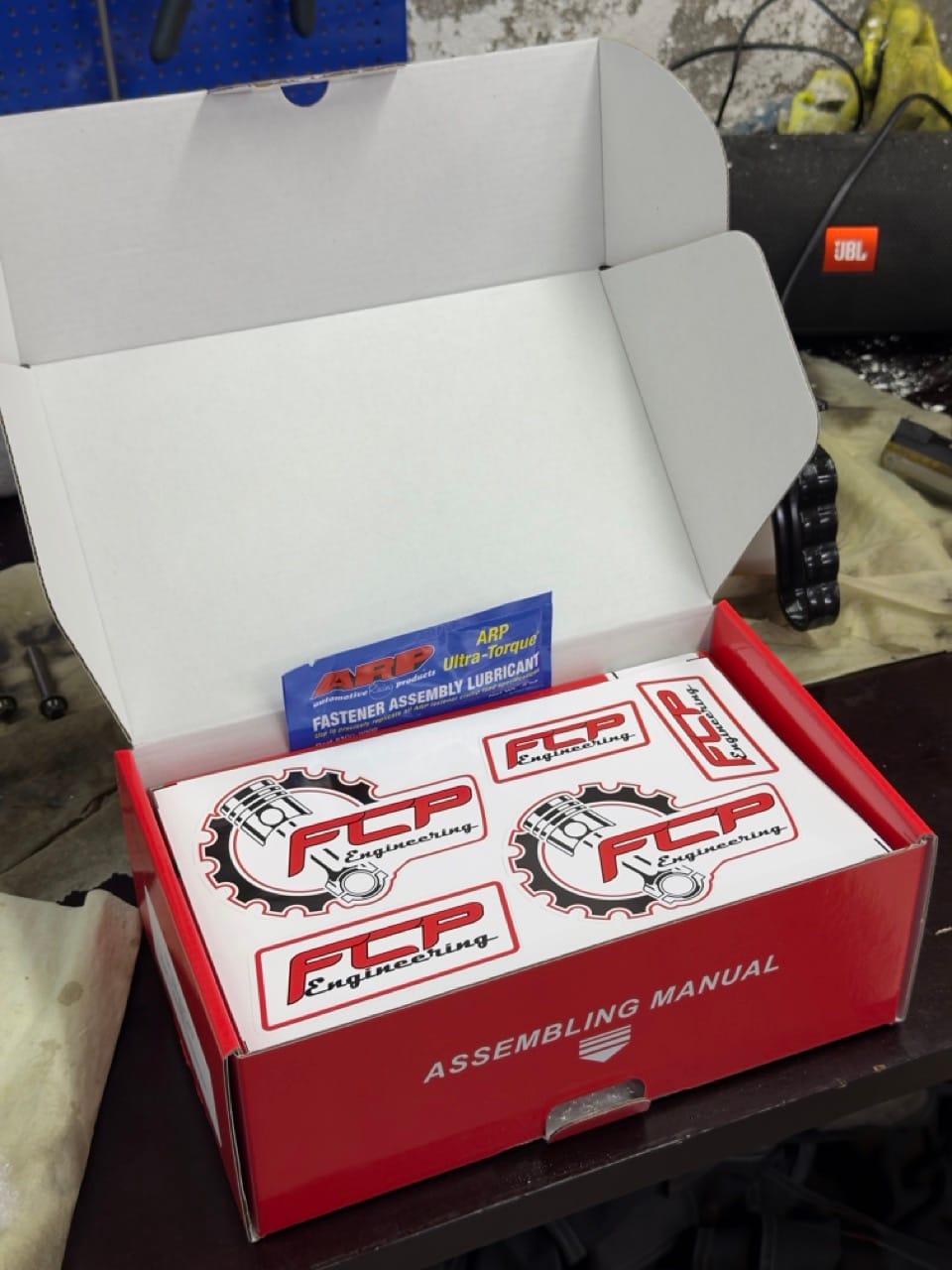
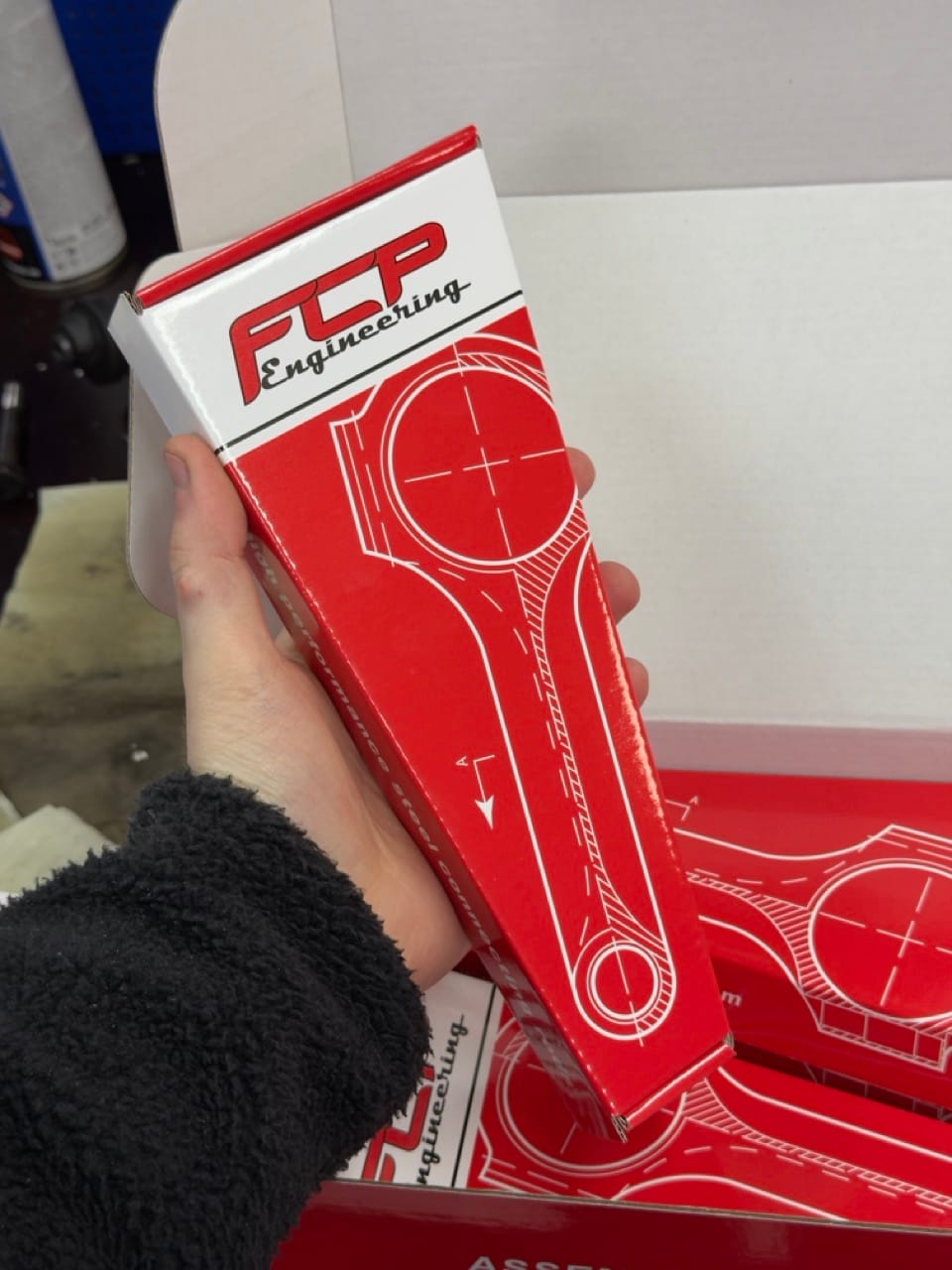
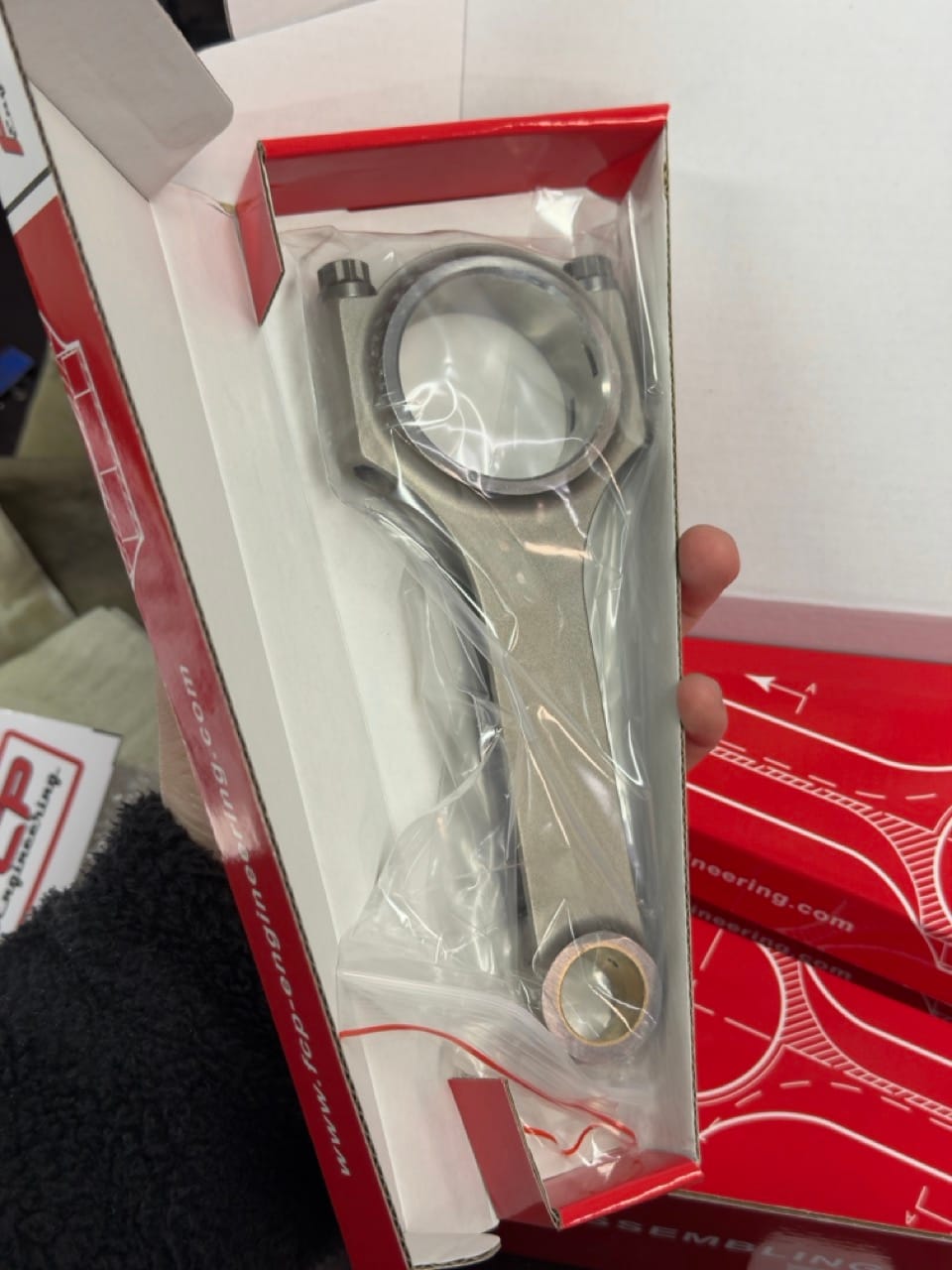
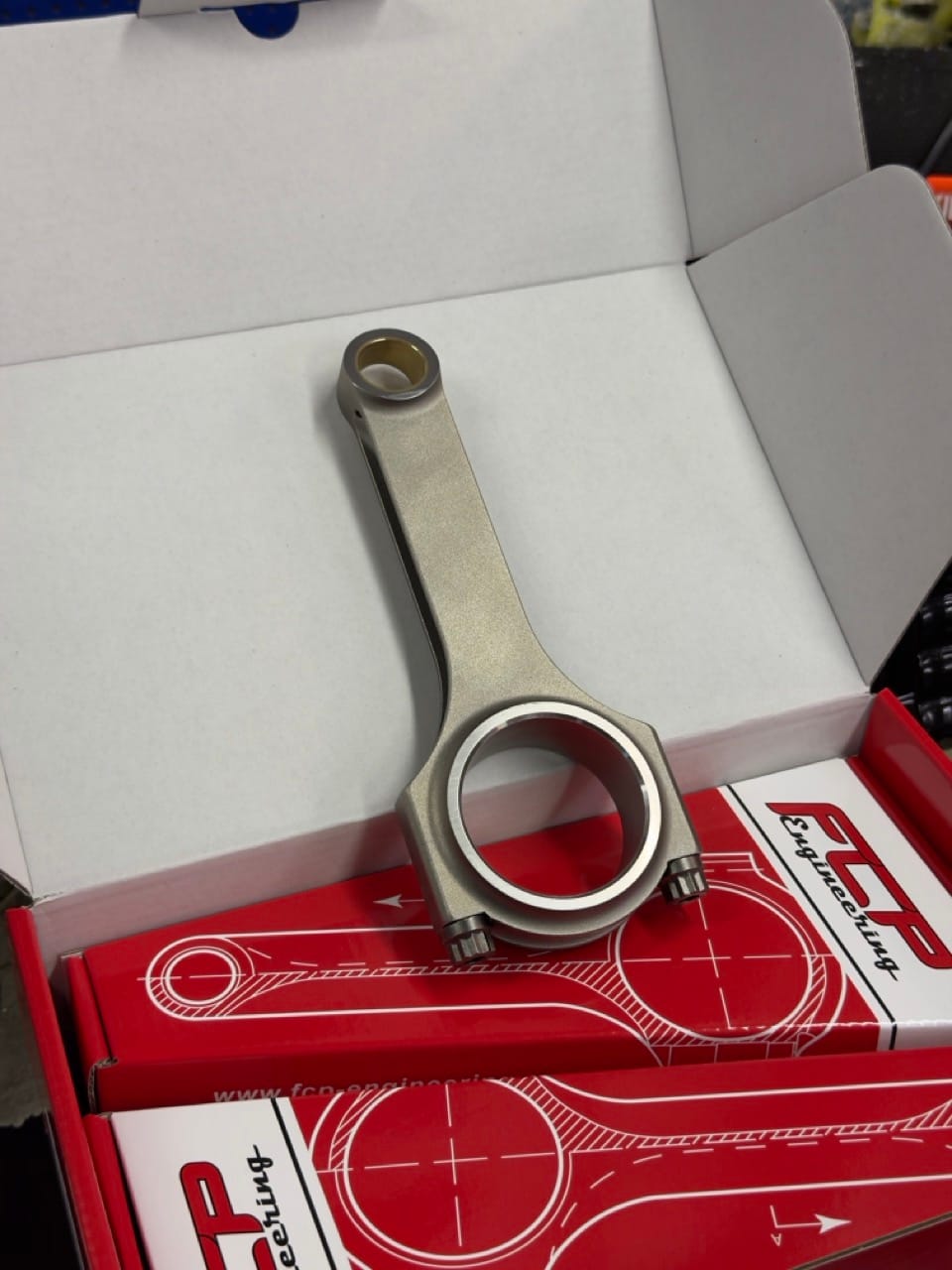
And honestly, they look and feel amazing.
I can add some photos of the original Mk5 GTI rods next to the new forged rods, because the difference is very obvious. The forged rods are just much more substantial. They feel premium, they look premium, and they definitely inspire a lot more confidence.
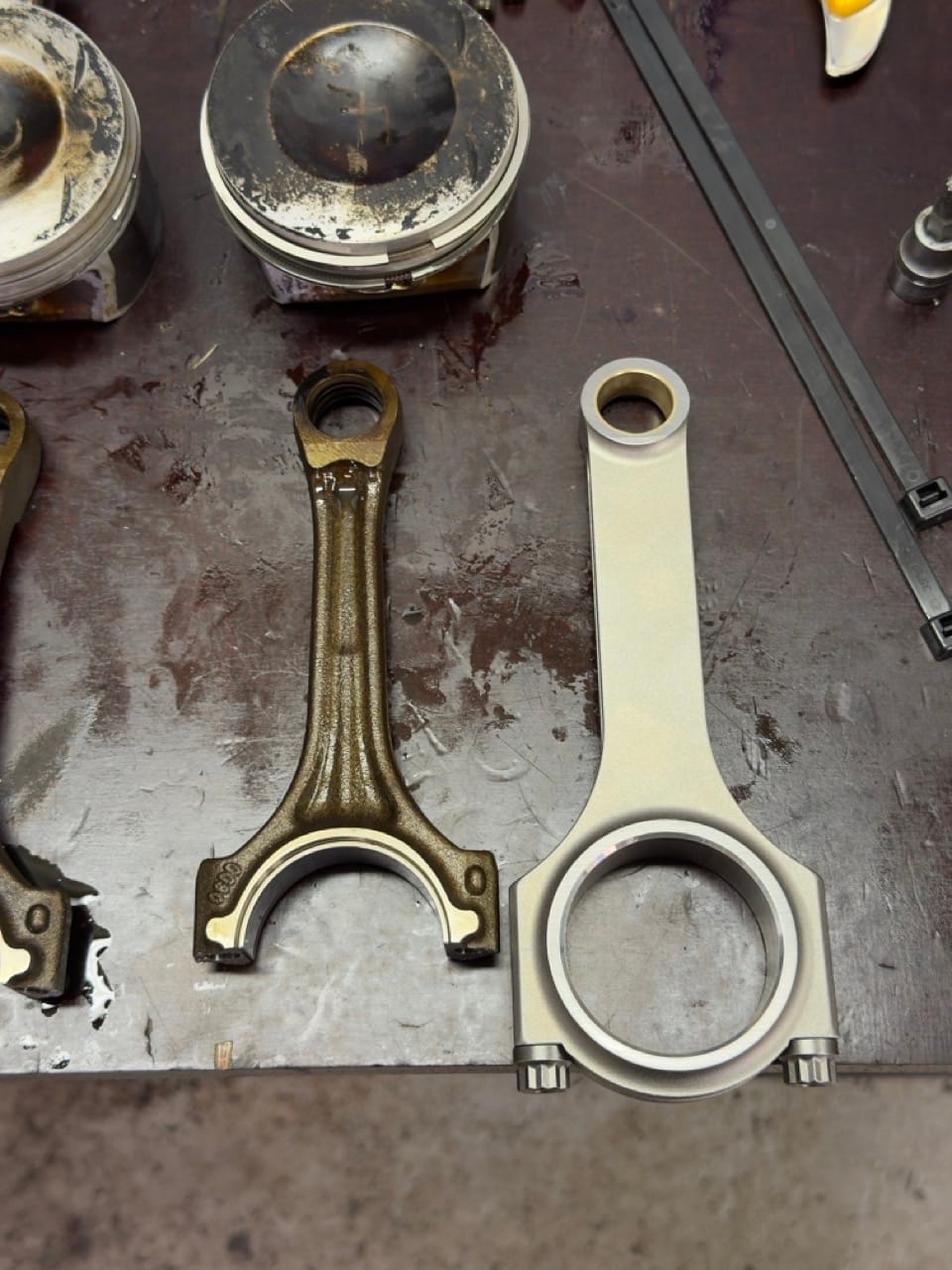
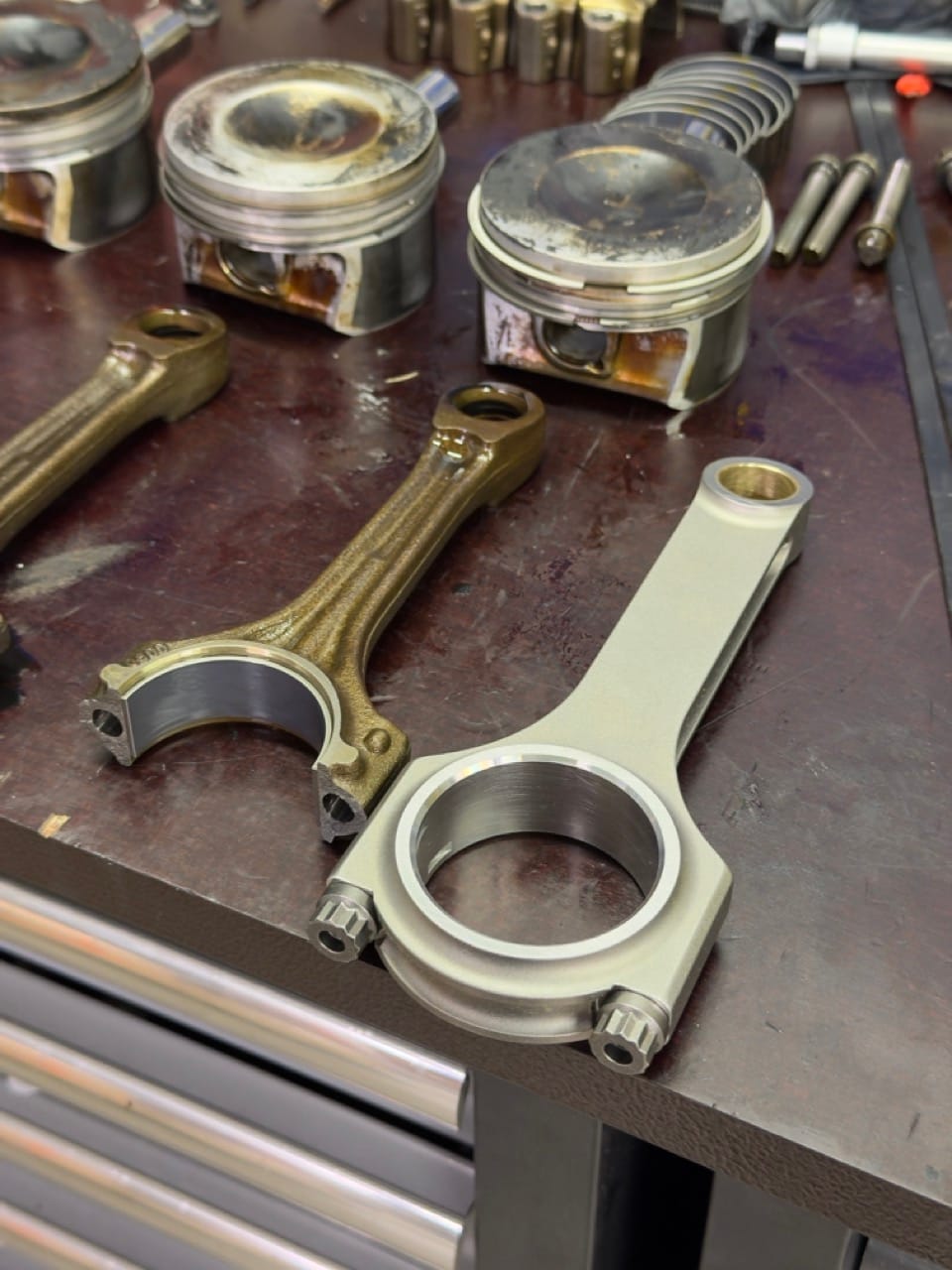
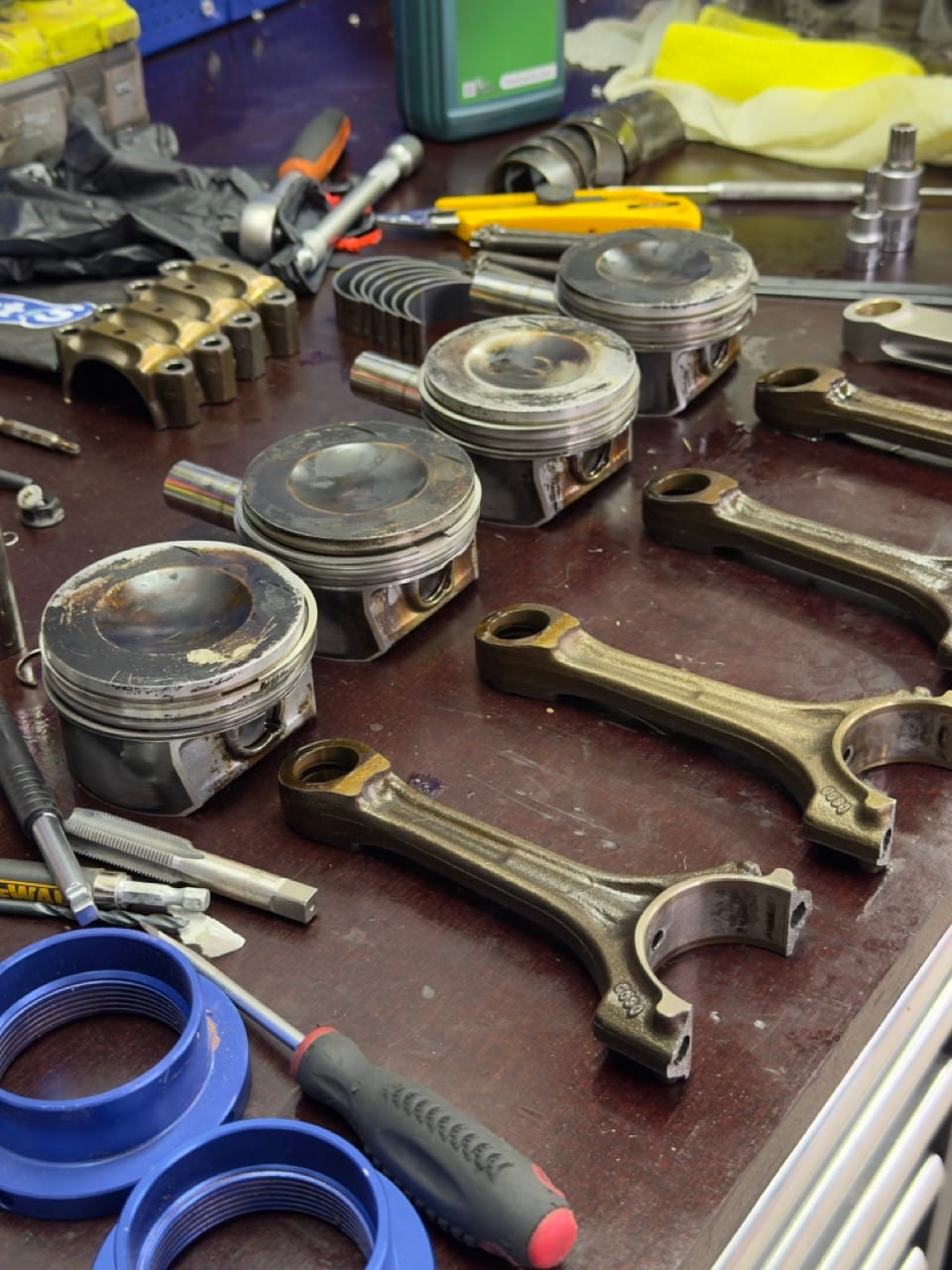
The forged rods also came numbered already, so technically we did not even need to mark them ourselves. But we did anyway, partly for fun and partly because it is a good habit to get into.
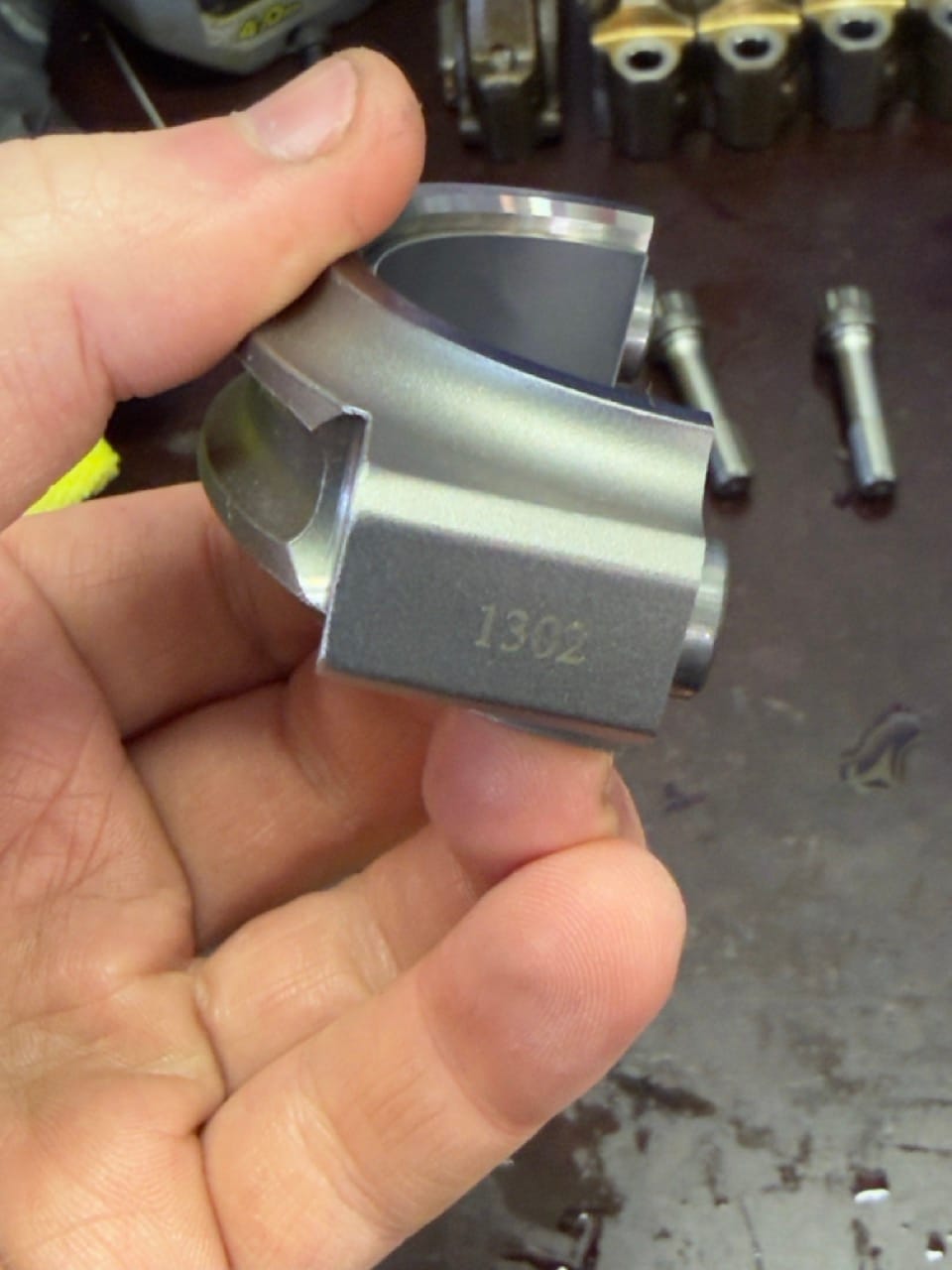
That part at least felt good. After all the bad news, it was nice to have some genuinely quality parts arrive.
Reusing the original pistons
Ideally, if budget and time were unlimited, I would probably have drilled and bored the cylinders to 82.5 mm and gone for a more complete setup with new oversized pistons as well.
But reality is reality.
There is a time constraint.
There is a budget.
And I had already spent more money on this car than I originally intended.
So instead of blowing the budget even further, I decided it was fine to reuse the original pistons. From what I understand, these pistons are good for somewhere around 500-ish hp, which is well above what I am aiming for anyway.
The rods were the weak point, not really the pistons.
We also already had brand new piston rings, so it would have been a bit painful to suddenly go in a completely different direction and not use them.
So that became the plan:
- keep the original pistons
- use the new rings
- fit forged rods
- make the best version possible of this slightly cursed engine
Not the dream scenario.
But probably the most sensible one.
A few other parts arrived too
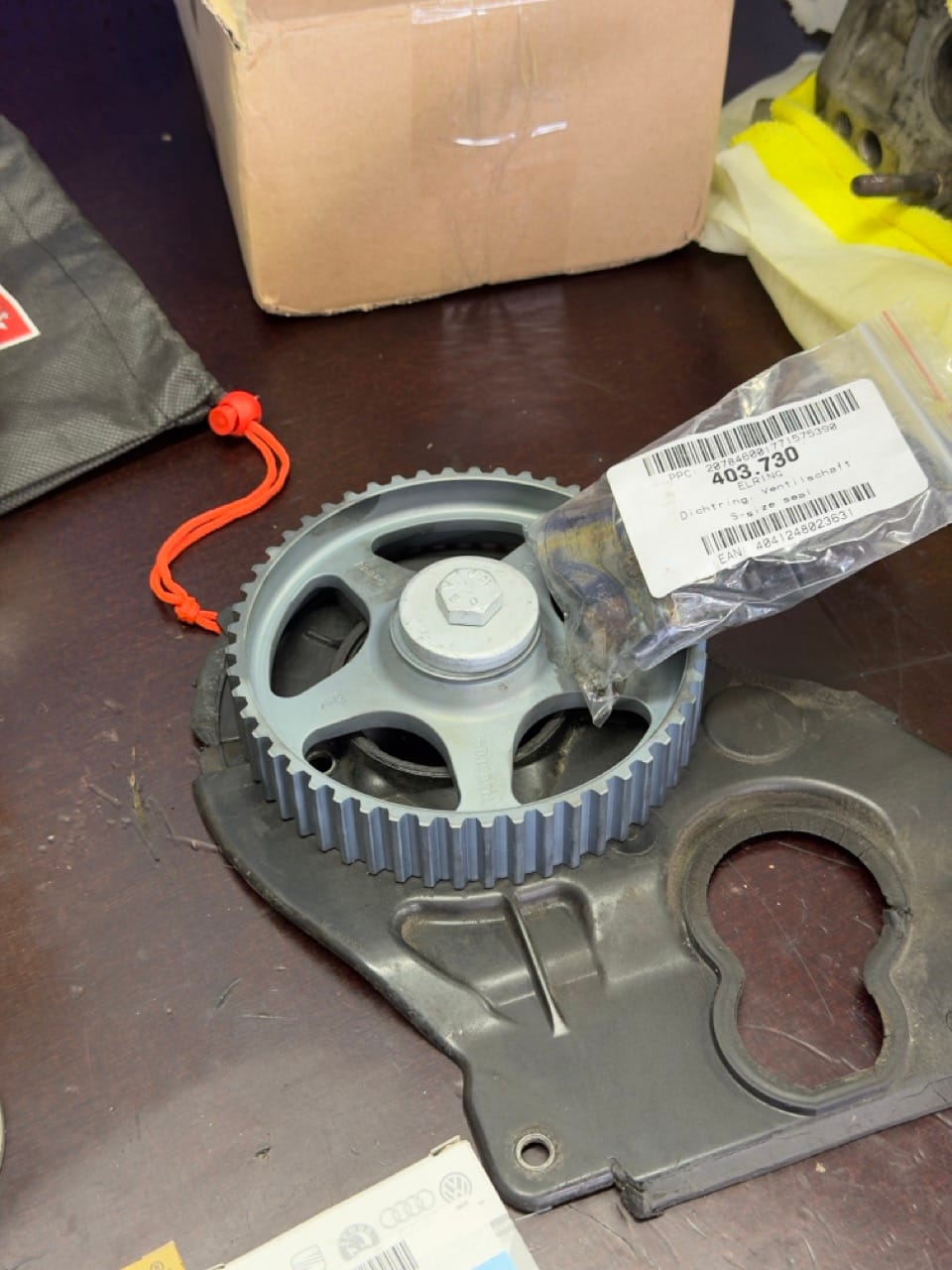
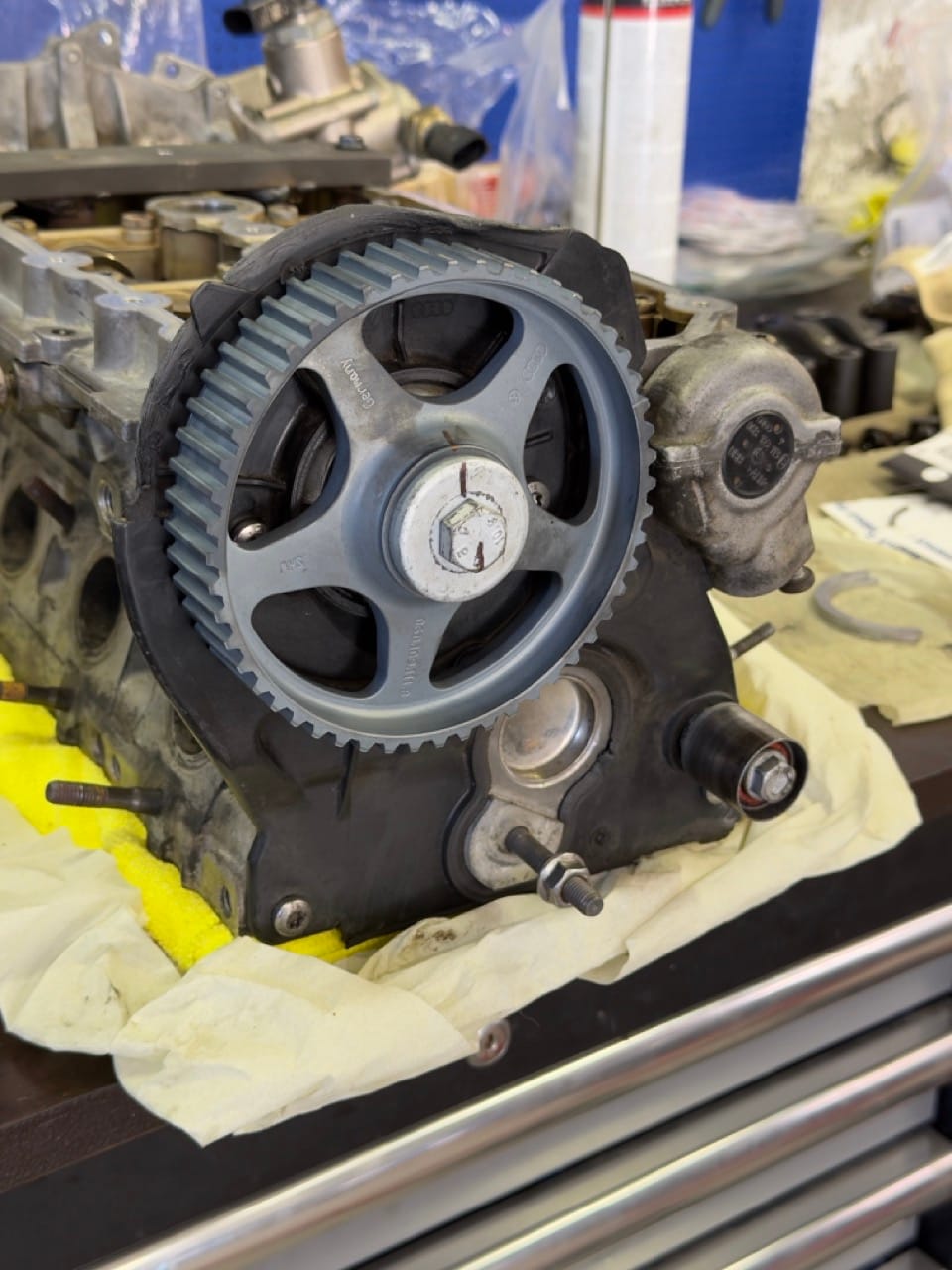
Since there is always something else going on with this car, I also got the new cog for the timing belt side; the one I managed to break earlier when removing it to replace the seal behind it.
That whole situation was still annoying, but at least the replacement arrived and we could move on.
I also got a new AC condenser.
The old one was looking pretty beat up, so replacing it now felt like the right move before it decided to start leaking and create yet another problem. It is one of those parts that is much easier to deal with while everything is apart anyway.
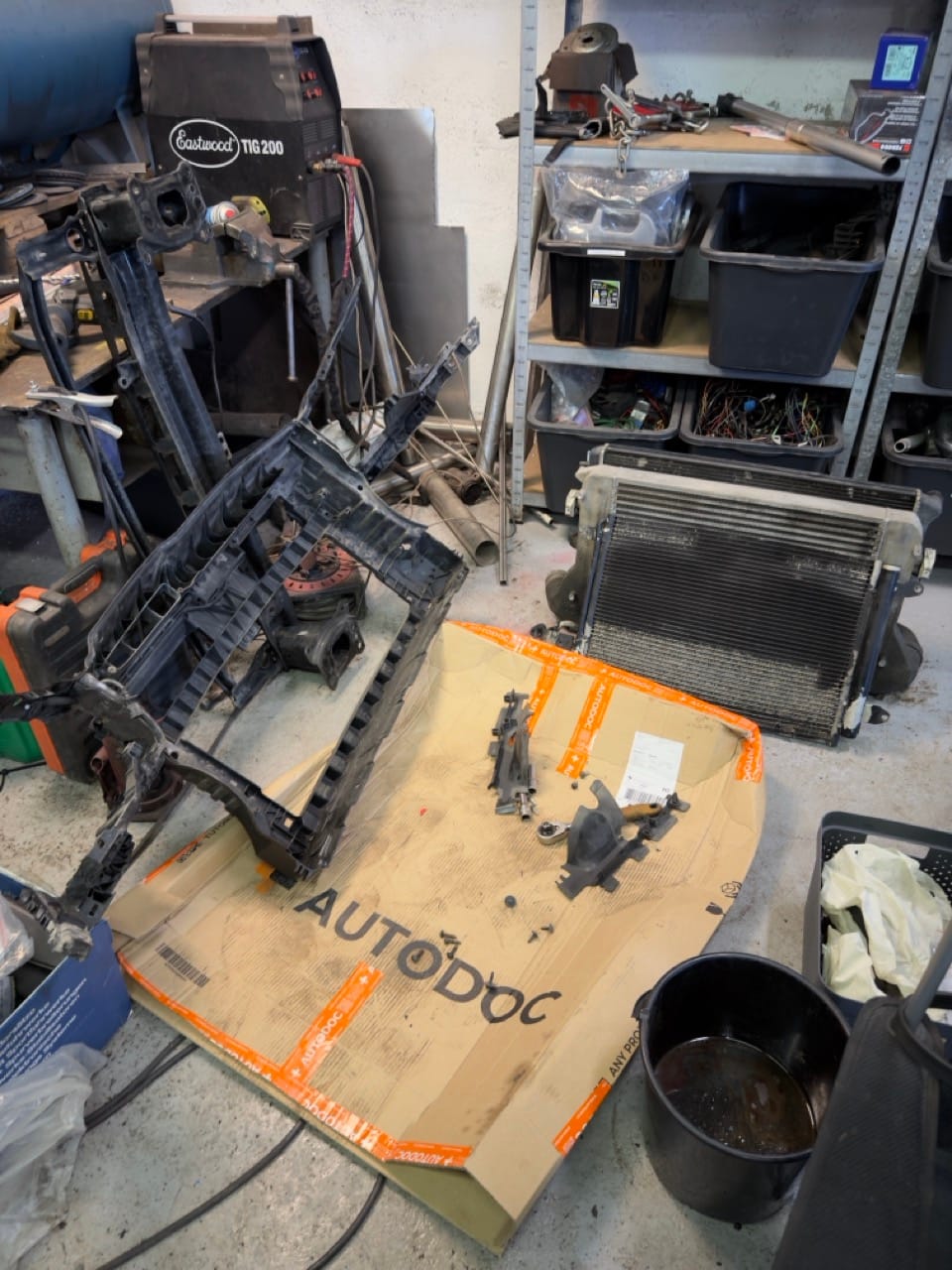
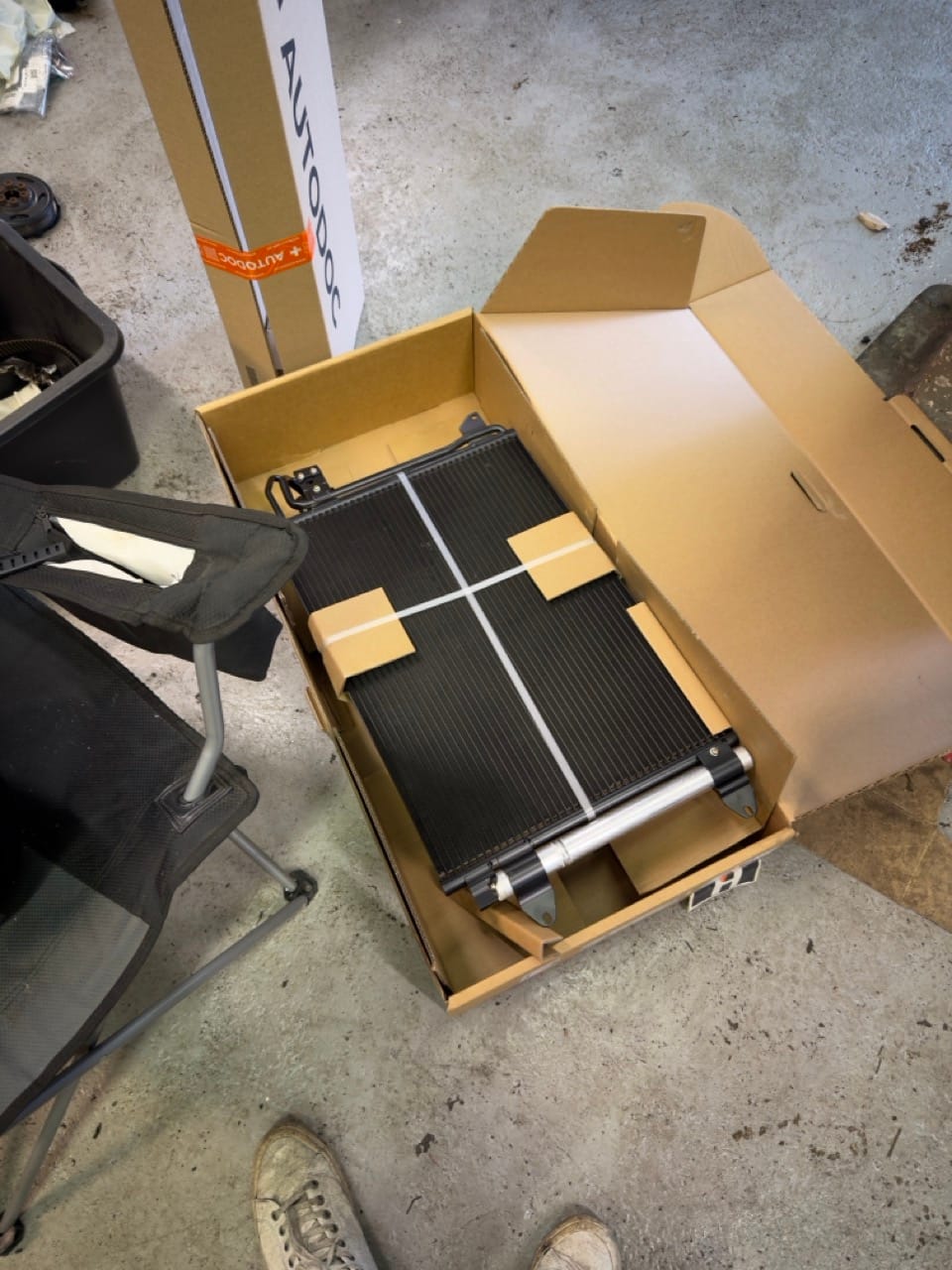
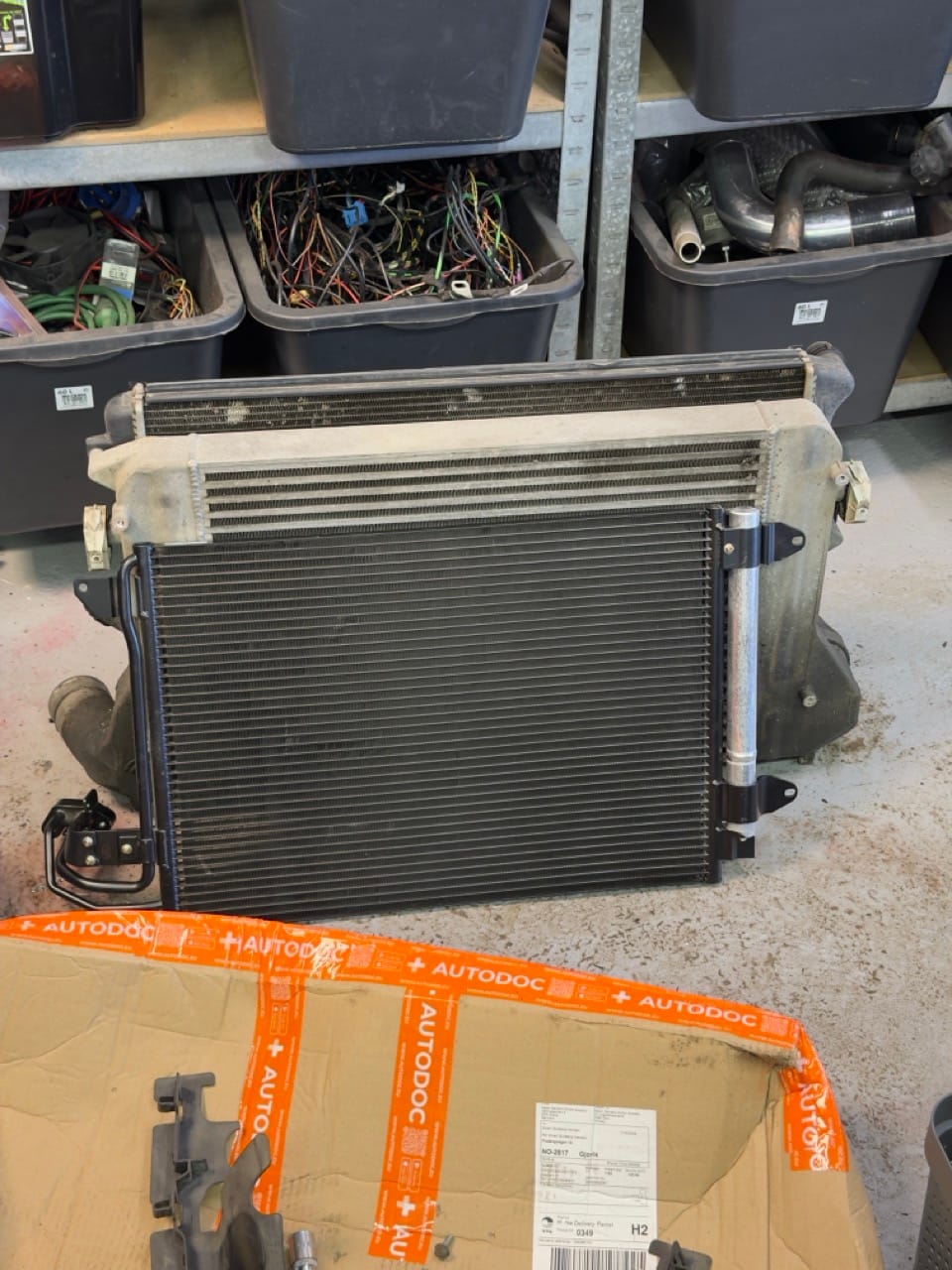
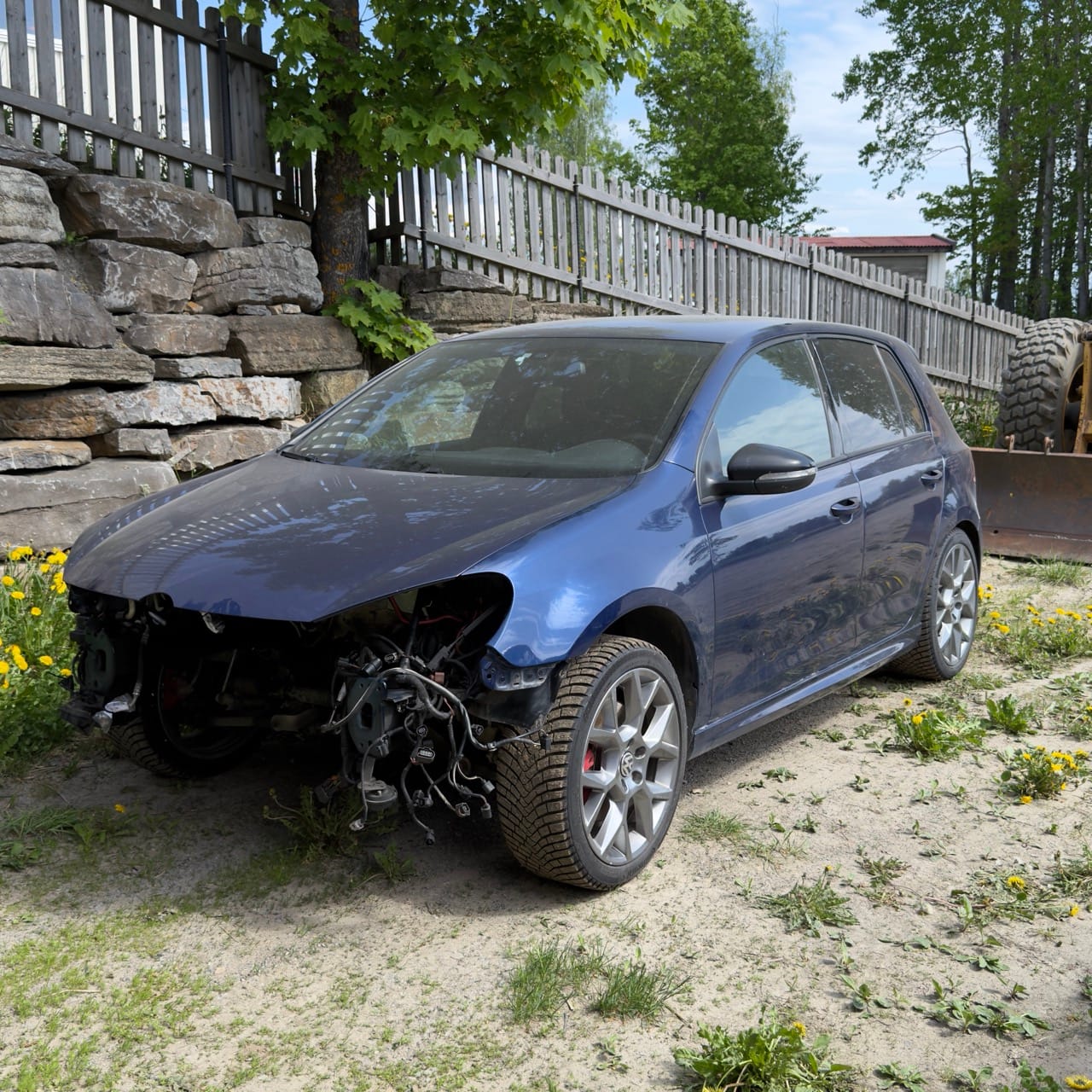
And while we are on the subject of the car being apart, I also have a photo of it sitting outside without an engine.
It looks very sad.
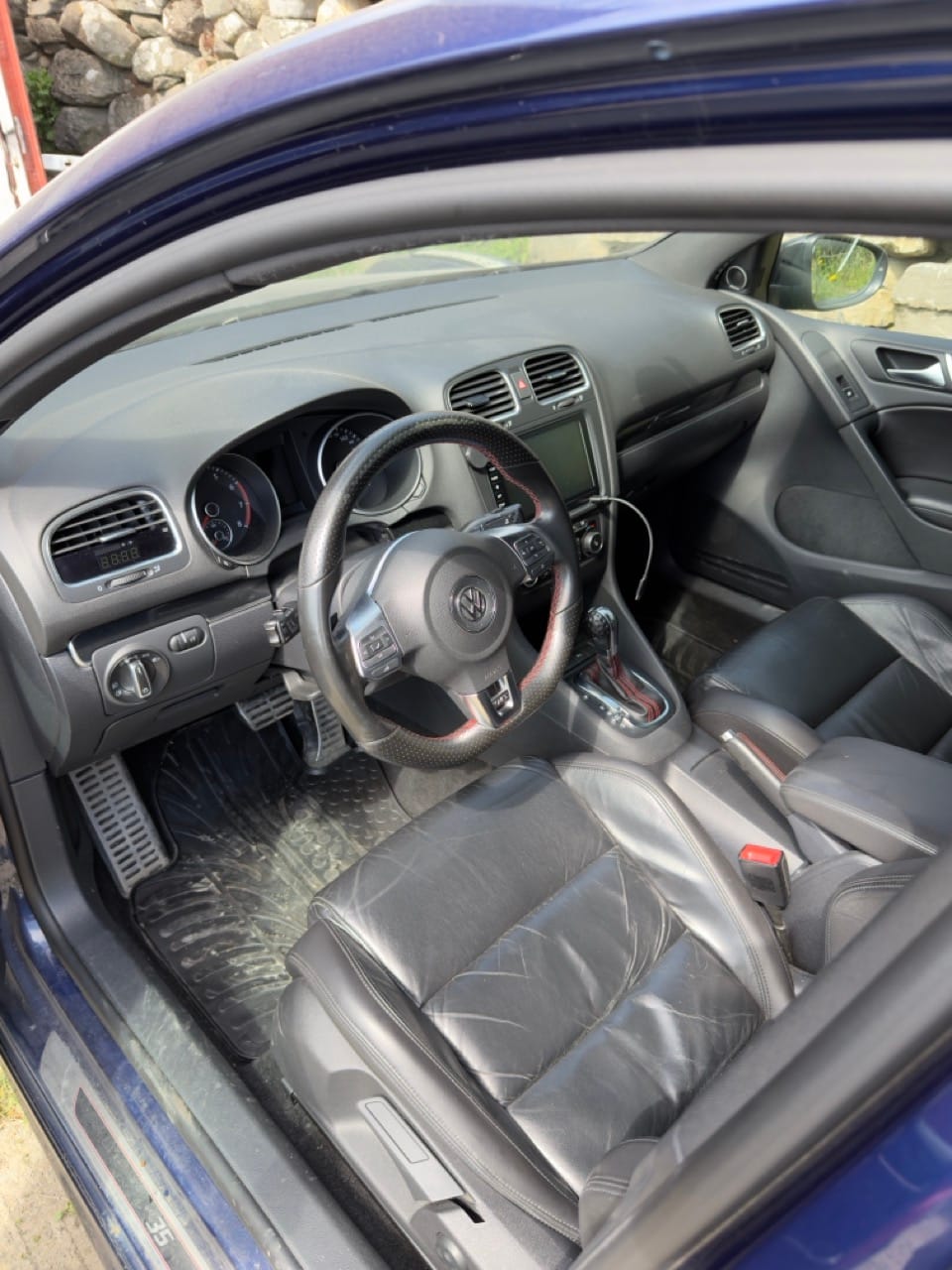
I also have a photo of the interior, because after three months of borrowing cars, jumping between diesels and electric cars, I can safely say that I really do miss my own car. I miss the interior, I miss the seating position, and I miss the whole feel of driving it.
Back to building
Once the rods and pistons were sorted, we could finally move on with assembling more of the engine.
And at that point, it actually started to feel like progress again.
To tighten the bolt for the crankshaft sprocket, you need a way to hold everything in place. Originally, I was going to recreate a holder tool I found online.
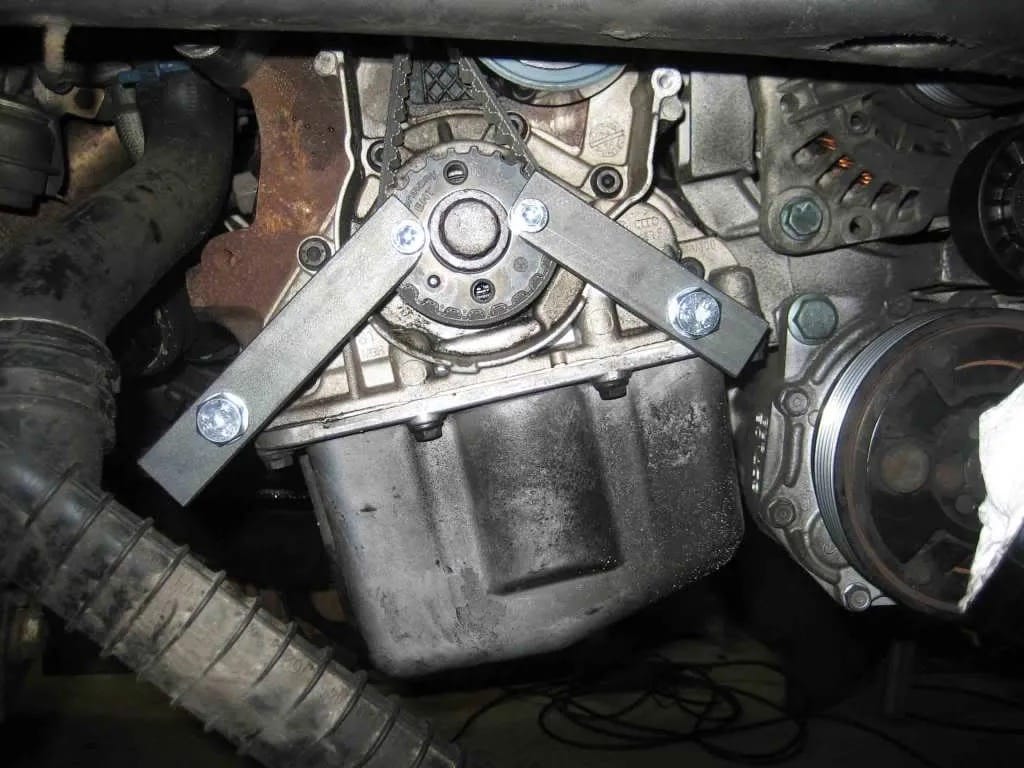
But instead, my friend came over and we built a custom holding tool ourselves.
Honestly, that was a pretty fun little side project, and it worked.
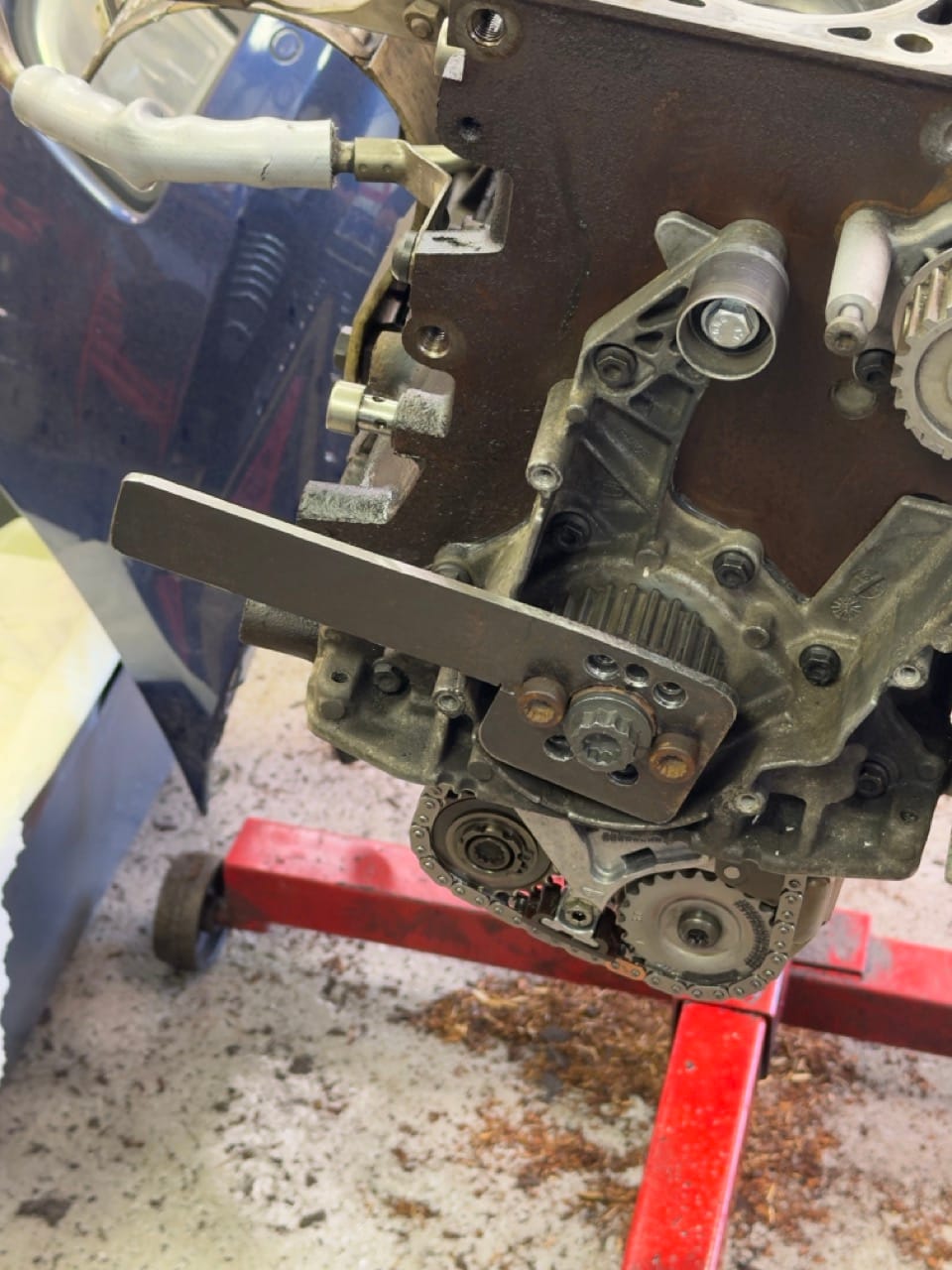
That meant we could finally tighten everything properly and continue assembling the engine.
Then the top could finally go on, and the bolts were tightened in sequence as they should be.
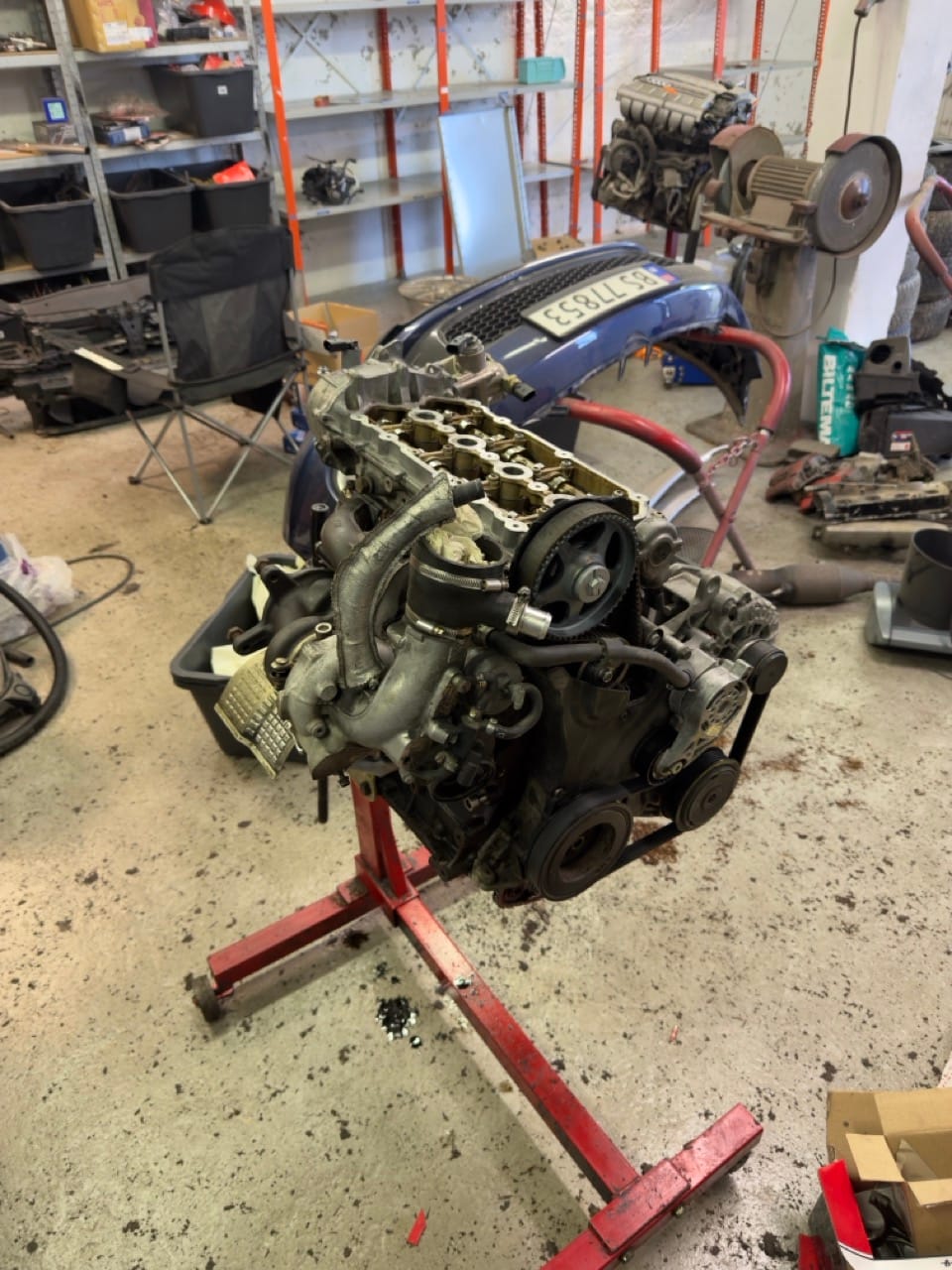
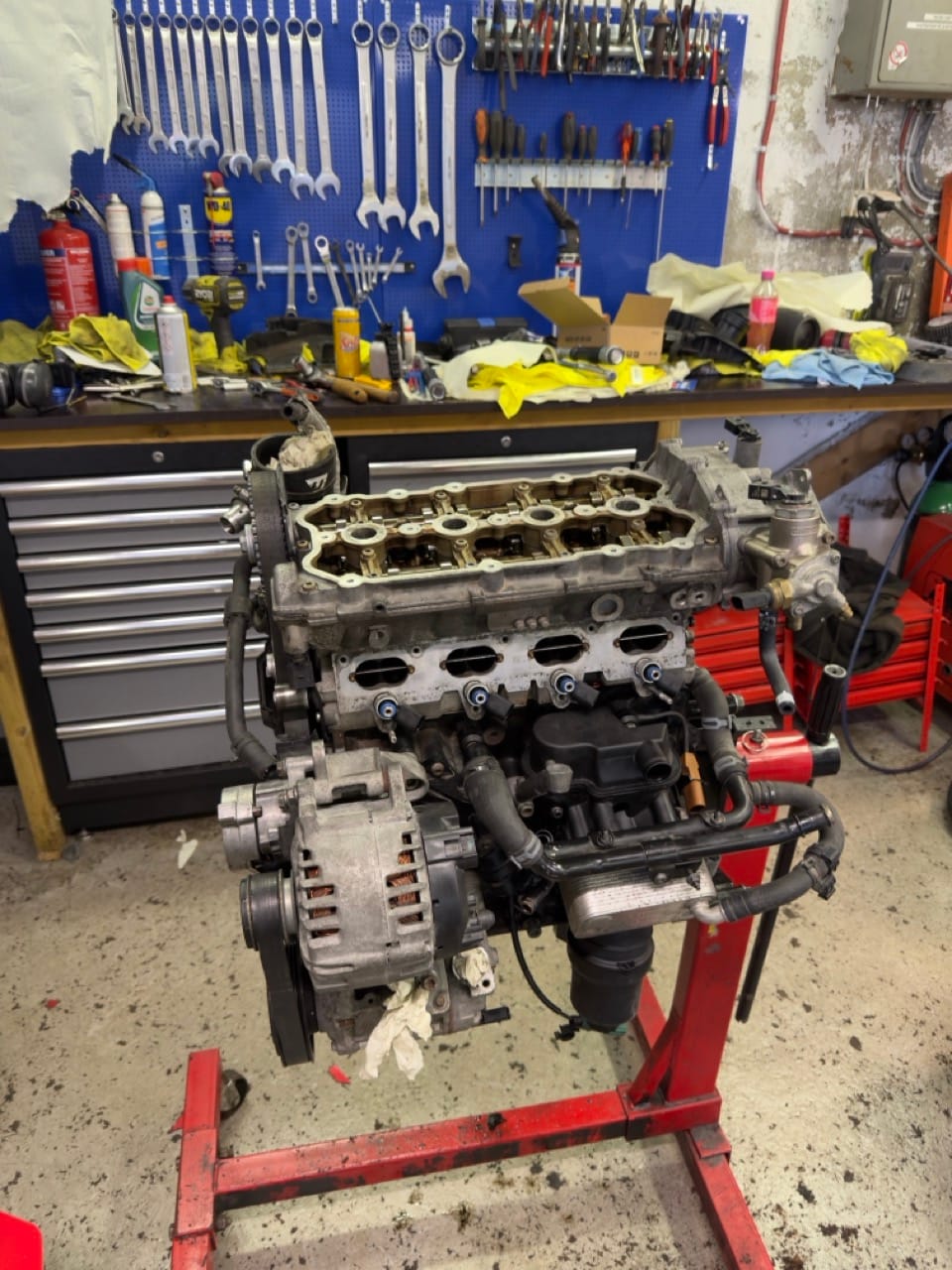
That was a good moment.
Because for the first time in a while, it felt like we were no longer just discovering problems. We were actually building.
Removing the oil fill extension
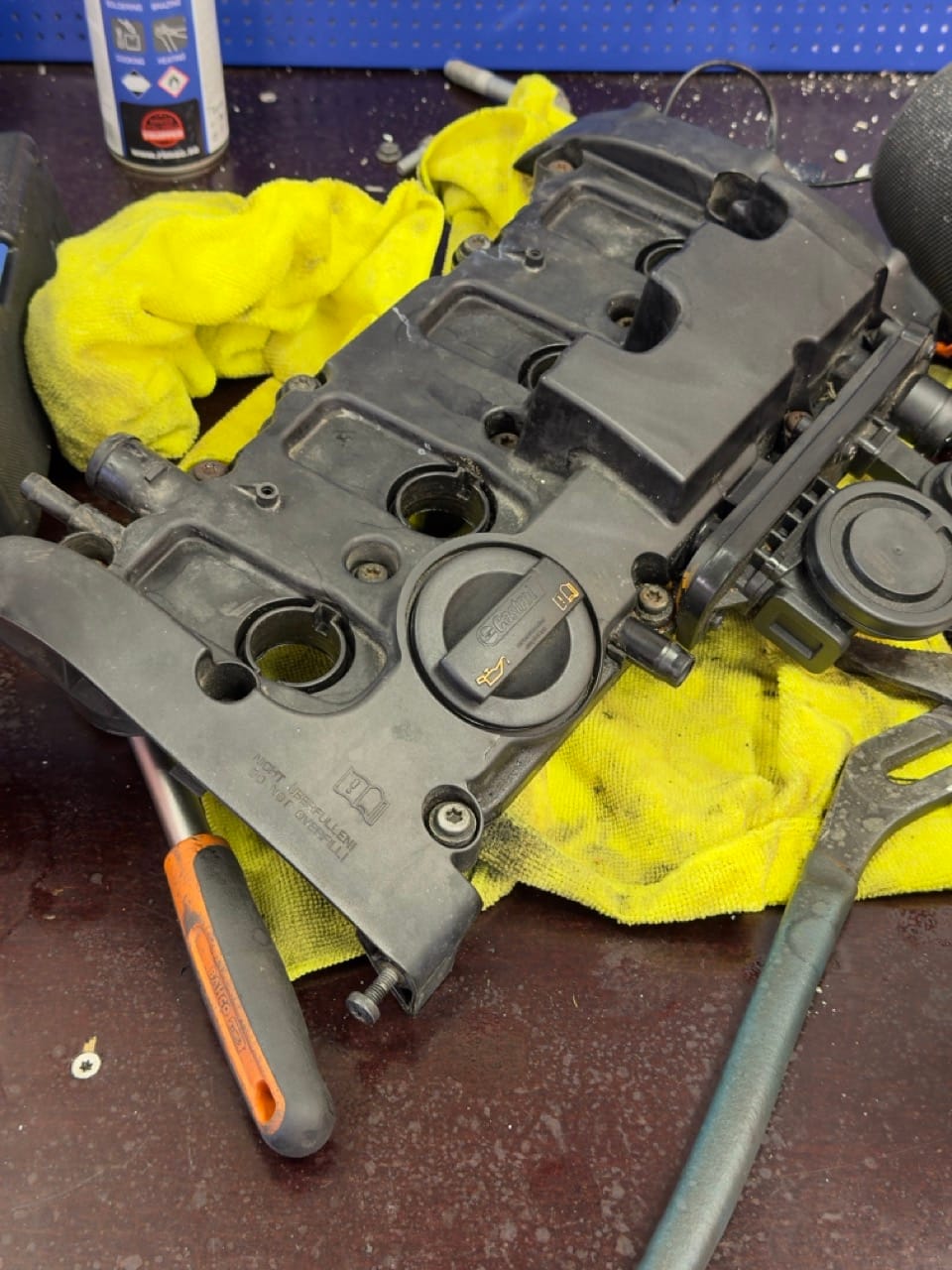
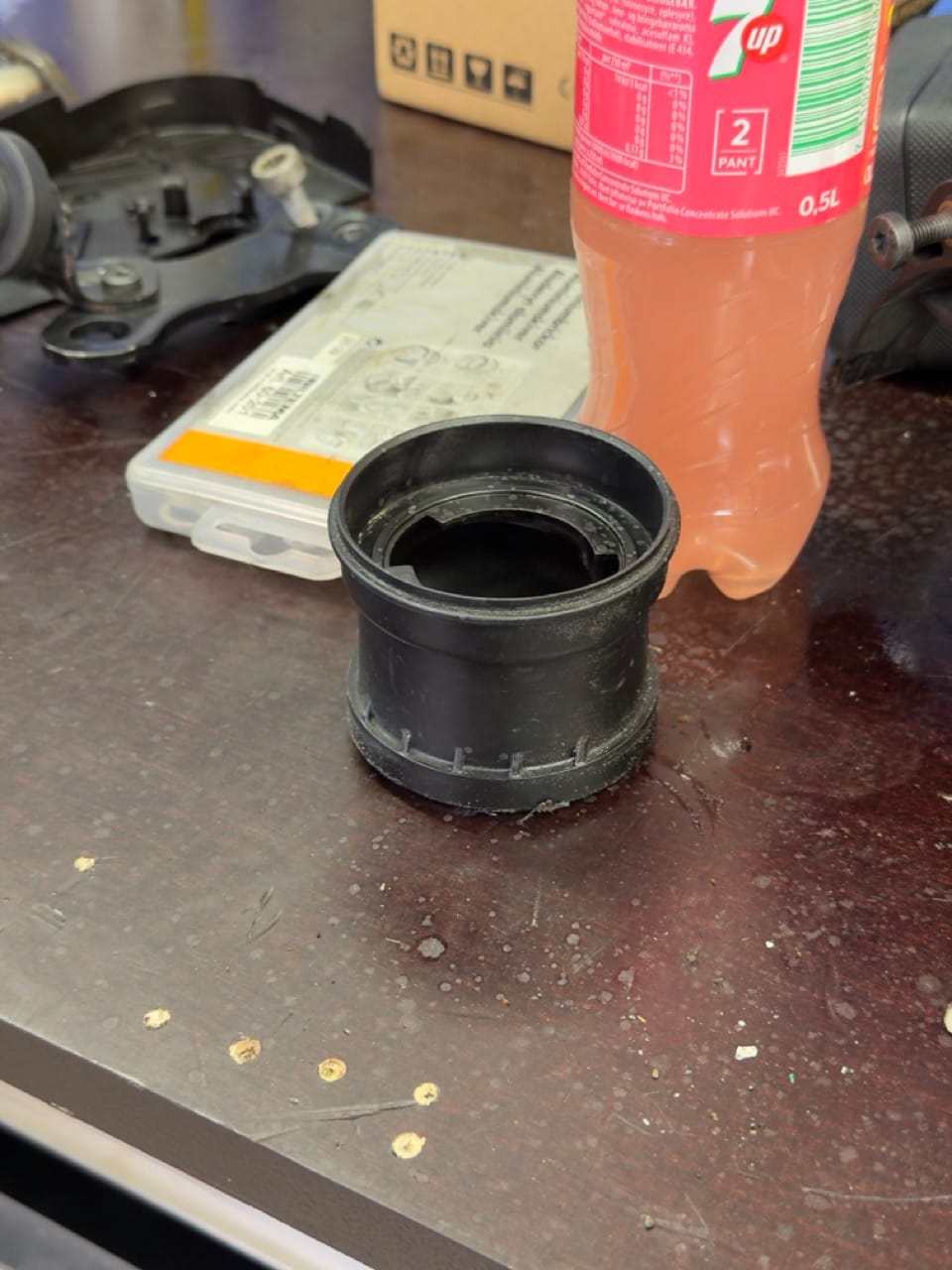
I also removed the oil fill extension, which was something I had wanted to do for a while.
Since I do not use the original engine cover anyway, there was really no reason to keep it. And honestly, it looks much better without it.
It turned out to be pretty easy to remove, just like people on the forums had said. Basically, you squeeze it carefully with pliers until you hear the glue cracking. Do that on multiple sides, and eventually it just pops off.
Very simple.
And much cleaner looking afterwards.
The final assembly photos
From there, it was really just a matter of continuing to build the rest of the engine.
Fitting tubes.
Fitting brackets.
Fitting the serpentine belt.
Putting everything together piece by piece.
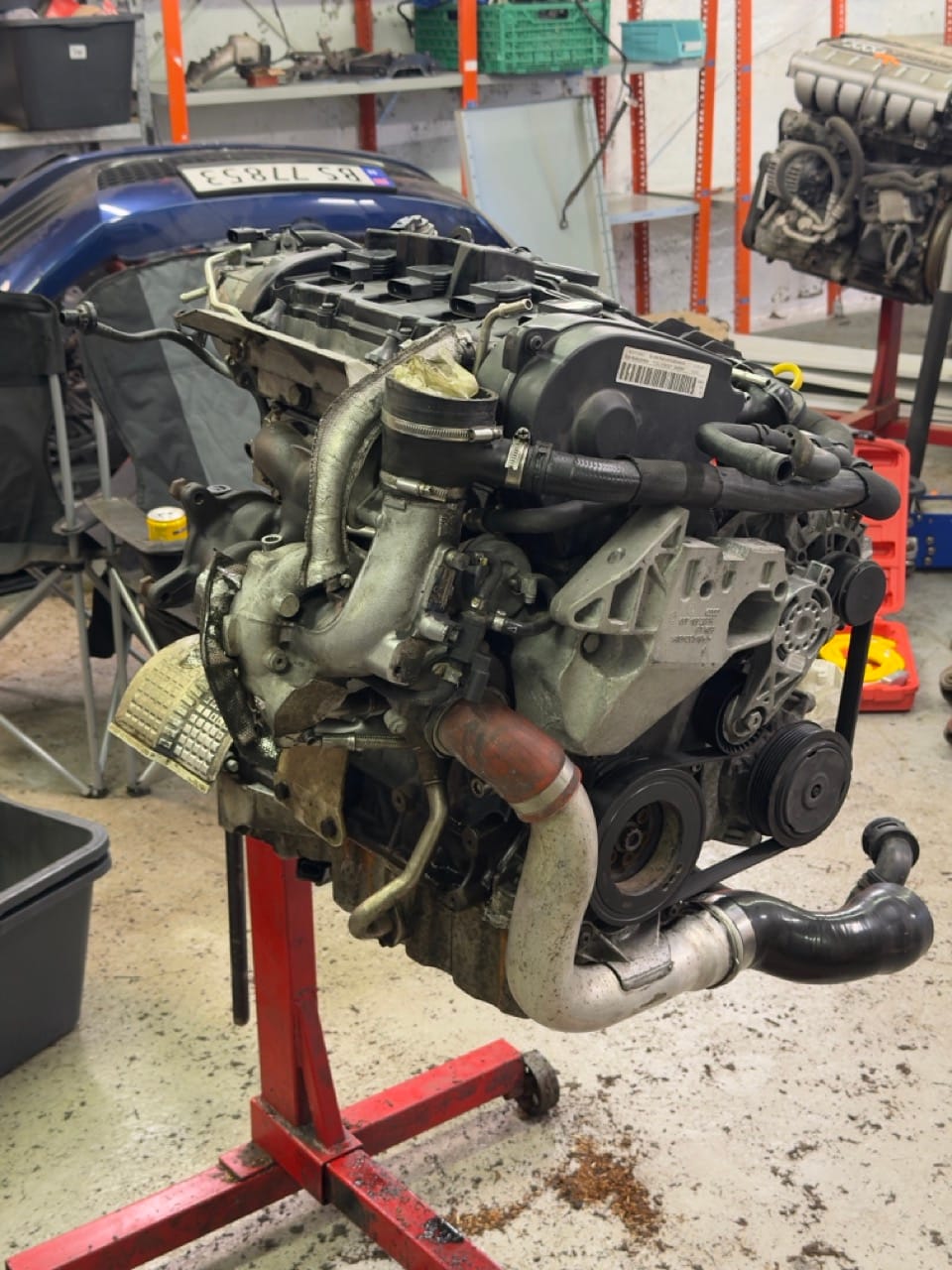
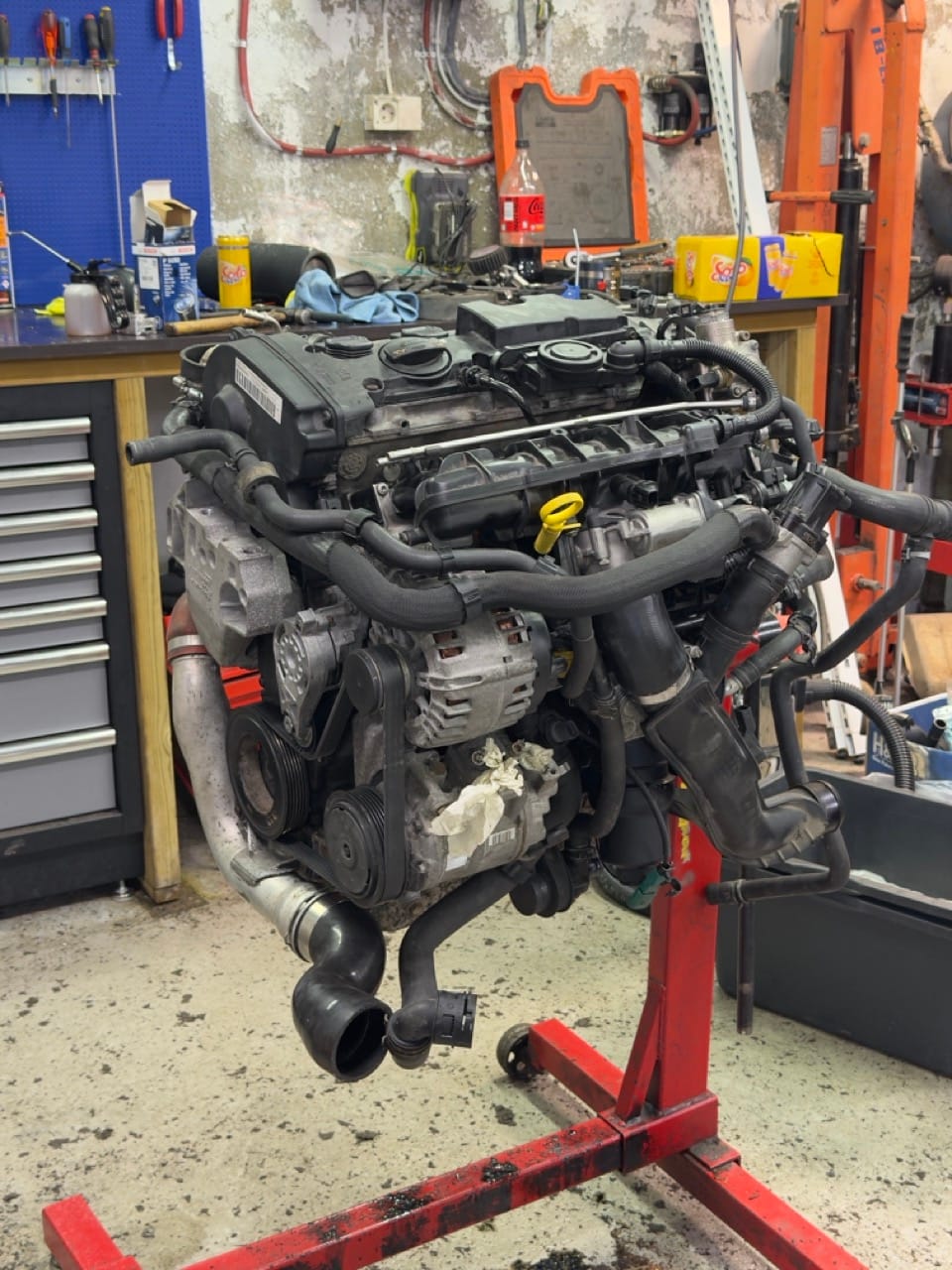
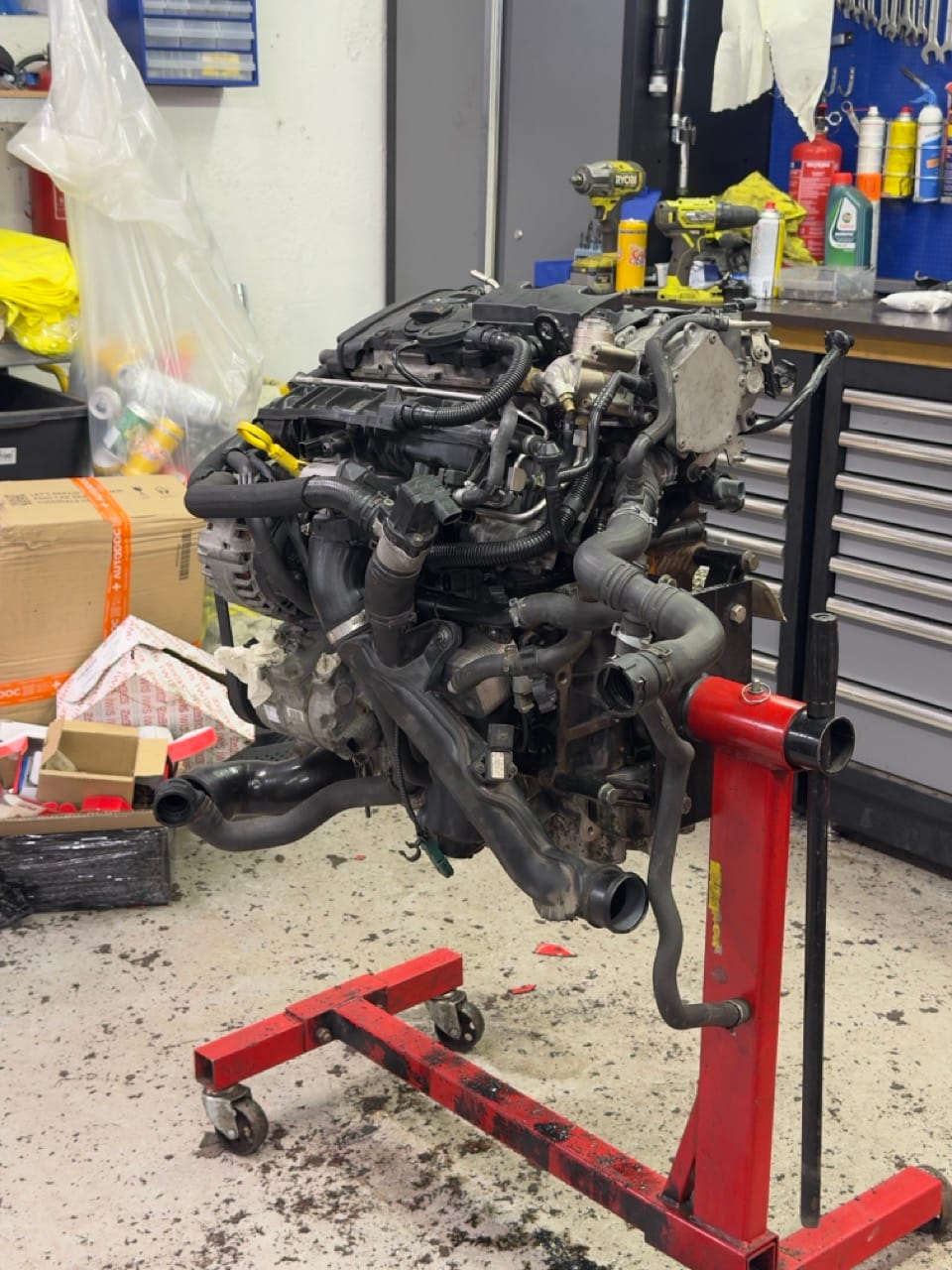
That was a very satisfying sight after everything this project has thrown at me.
Because even though this update is called I Got Scammed, that is not really the end of the story.
If anything, it is just the ugly middle part.
The better part is this:
Even after finding out the engine was not what it should have been, we still kept going.
We found a solution.
We upgraded the weak points.
We kept building.
And now the engine is finally together.
What is next?
Now the next step is getting the engine back into the car.
That means pushing the car into the workshop, getting it lifted, and preparing to install everything again.
So yes, this update came with some very bad news.
But the project is not dead.
Not even close.
If anything, it just got a bit more complicated than expected.
And now, finally, we are getting to the part where it starts becoming a car again.